Most foreigners buying property or relocating to Trebinje assume opening a bank account is straightforward. They’re surprised to discover it’s one of the more friction-heavy steps in the whole process — not because it’s complicated, but because banks in Bosnia and Herzegovina operate differently from what most international arrivals expect.
This guide covers everything you need: which banks to consider, what documents to bring, what to expect in practice, and how a local account fits into your broader property purchase or relocation plan.
Do you actually need a BiH bank account?
For property buyers transferring funds from abroad, a local bank account is not strictly required to complete a purchase. Your transfer can go directly to your lawyer’s client account. However, a local account becomes essential once you:
- Own property and need to pay utility bills, property tax, or maintenance costs
- Take up residency in Bosnia and Herzegovina
- Earn rental income from a Trebinje property
- Want to avoid repeated international transfer fees for ongoing local expenses
For retirees and remote workers relocating full-time, a local account is effectively mandatory within months of arrival.
Which banks operate in Trebinje?
Trebinje is a small city, so your options are more limited than in Sarajevo or Banja Luka. The main banks with branches present in the city include:
- UniCredit Bank — part of the large European UniCredit network; generally the most internationally oriented and experienced with foreign clients
- Raiffeisen Bank — Austrian-owned, widely used by expats and foreign property owners across the Balkans
- NLB Banka — Slovenian-owned, solid regional presence
- Sparkasse Bank — another Austrian-linked option with growing retail presence
- Local savings banks (štedionice) — available but generally not suited to foreign clients given limited English-language service
For international buyers and relocators, UniCredit and Raiffeisen are the two banks most commonly recommended. Both have English-speaking staff in larger branches and are accustomed to handling accounts for non-residents.
Non-resident vs. resident accounts
This is the key distinction that most guides overlook.
Non-resident account: You can open this without a registered address in Bosnia and Herzegovina. It allows you to receive and send funds, pay local bills, and manage property expenses. However, functionality is more limited — some banks restrict online banking access or card issuance for non-residents.
Resident account: Opened once you have a registered address (boravište) in BiH. Provides full banking functionality including debit cards, online banking, and access to savings products. If you’re relocating permanently, this is what you’ll eventually want.
If you’re a property buyer visiting Trebinje to complete a purchase, aim to open a non-resident account during that trip. You can upgrade to a full resident account once you establish residency.
Documents required
Requirements vary slightly between banks, but expect to provide:
For non-residents:
- Valid passport
- Proof of address from your home country (utility bill or bank statement, dated within 3 months)
- Tax identification number from your home country
- Purpose of account (property ownership, rental income, relocation — be clear and consistent)
- In some cases, proof of property purchase (preliminary contract or sales agreement)
For residents (in addition to above):
- Registered address confirmation (potvrda o prijavi boravišta) from local police or municipality
- Your BiH tax identification number (PIB) — obtained as part of property registration
Some banks may also request a source of funds explanation for significant initial deposits, particularly if you’re funding the account from an international transfer. This mirrors the anti-money-laundering checks you’ll also hit on large cross-border transfers into the region, which the return guide covers in its financial planning sections.
What to expect at the branch
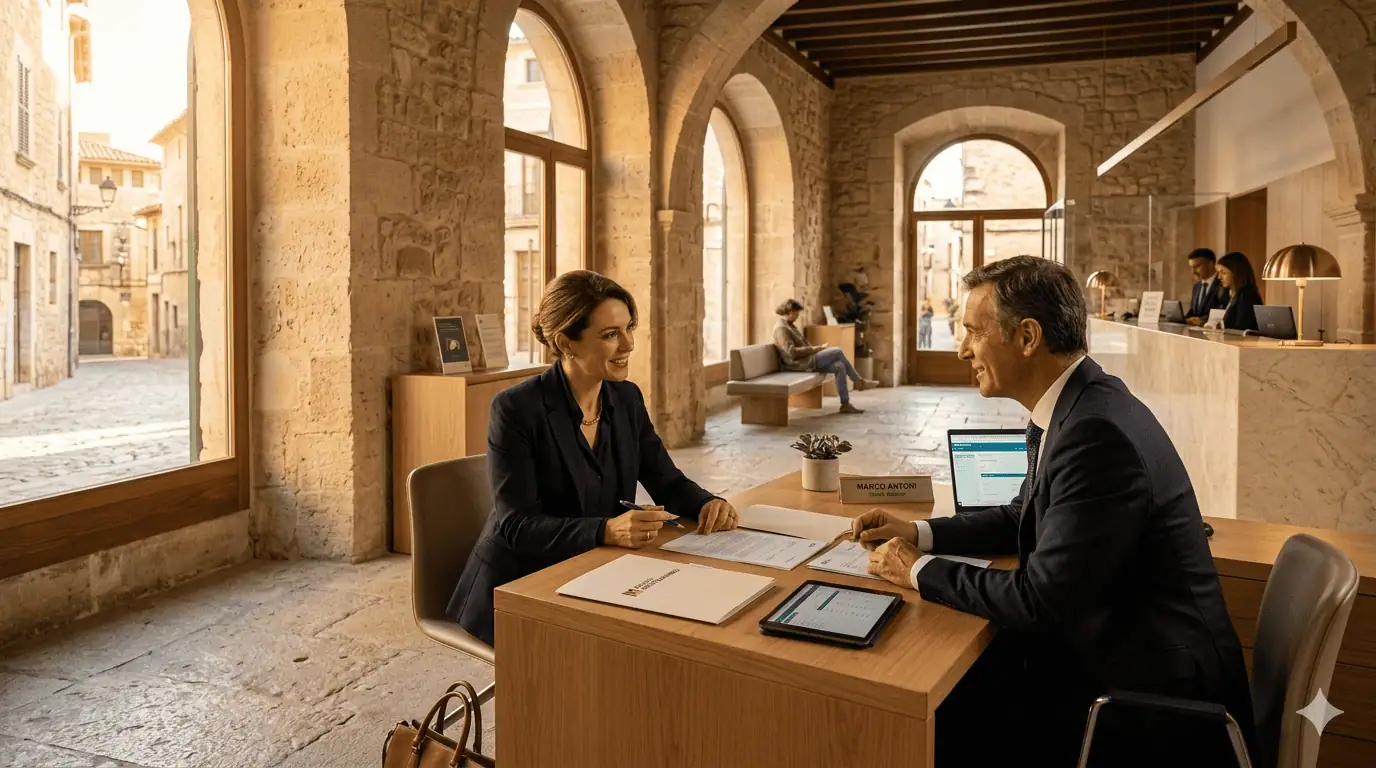
Walk-in account opening is standard — you cannot open a BiH bank account fully online as a foreigner. Plan to visit a branch in person, ideally with a local contact or your property lawyer who can assist with translation if needed.
A few practical points:
- Book an appointment where possible. UniCredit and Raiffeisen branches in larger cities allow appointments; Trebinje branches are smaller and walk-ins are common, but mornings on weekdays are less busy.
- Bring originals, not just copies. Banks will want to see original documents and may take their own copies at the branch.
- Allow time. Account opening for foreign clients typically takes 30–60 minutes, sometimes longer if documentation questions arise.
- English-language service is available at both UniCredit and Raiffeisen but is not guaranteed at every branch. If you’re not comfortable in Bosnian/Serbian, bring someone who is, or contact the bank in advance to confirm an English-speaking advisor will be available.
Account activation — including card issuance and online banking setup — may take a few additional days after the initial visit.
Banking fees and costs
BiH banking fees are modest by Western European standards. Typical costs:
- Account maintenance: €3–8/month depending on account type and bank
- Debit card: usually included or €5–10 annual fee
- Incoming international transfers: €5–15 per transfer, sometimes free for SEPA payments
- Outgoing international transfers: €15–25 per transfer
- ATM withdrawals: free at own-bank ATMs; €1–3 at other banks
For property owners managing occasional transactions (utility payments, property tax, maintenance), monthly costs are minimal. One caveat worth repeating from the nomad guide: daily life in Trebinje still runs substantially on cash, so budget for ATM withdrawals even after your card is issued.
Local account + international transfer services
Once your property purchase is complete, your BiH account works well for day-to-day local expenses. For larger transfers — sending money from the UK, EU, or elsewhere to cover renovation costs, annual property expenses, or rental income repatriation — you’ll still get better exchange rates and lower fees through a specialist FX service like Wise rather than bank-to-bank transfers.
The practical setup most foreign property owners use: a BiH account for local outgoings, and a Wise or similar account for converting and moving larger sums efficiently. The cost of living guide for remote workers notes the same wire-vs-Wise maths in its banking section — bank transfers here can run €15–40 each way.
Timeline: when to open your account
If buying property: Try to open a non-resident account during the same trip as your preliminary contract signing. This gives you a local account ready to receive rental income or handle expenses from day one of ownership.
If relocating: Open a non-resident account on arrival, then upgrade to a resident account within the first 30–60 days once you’ve registered your address at the local municipality.
If managing remotely: A non-resident account can be maintained indefinitely without physical presence, as long as you maintain the account activity and keep your documentation current with the bank.
The key takeaways
Opening a bank account in Bosnia as a foreigner is manageable but requires in-person attendance, complete documentation, and a clear explanation of why you need the account. UniCredit and Raiffeisen are the most practical choices for international clients in Trebinje. A non-resident account covers most property ownership needs; a resident account is the goal if you’re relocating permanently.
Related guides: