On this page
- Housing Costs: Your Biggest Monthly Expense
- Renting in Trebinje
- Buying Property
- Monthly Utilities Breakdown
- Food and Groceries: Fresh, Local, and Affordable
- Supermarket Shopping
- Dining Out
- Local Markets: The Smart Shopper’s Secret
- Healthcare Costs: Quality Care Without Breaking the Bank
- Public Healthcare System
- Private Healthcare
- Prescription Medications
- Transportation: Getting Around Without a Car
- Public Transportation
- Owning a Vehicle
- Walking and Cycling
- Leisure and Entertainment: Living, Not Just Existing
- Cultural Activities
- Fitness and Recreation
- Social Life
- Additional Monthly Expenses
- Communications
- Personal Care
- Miscellaneous
- Sample Monthly Budgets: What Does It All Add Up To?
- Modest Lifestyle (Single Retiree)
- Comfortable Lifestyle (Retired Couple)
- Comfortable Lifestyle with Owned Property (Retired Couple)
- Money-Saving Tips for Retirees
- Hidden Costs to Consider
- The Bottom Line: Exceptional Value for Retirees
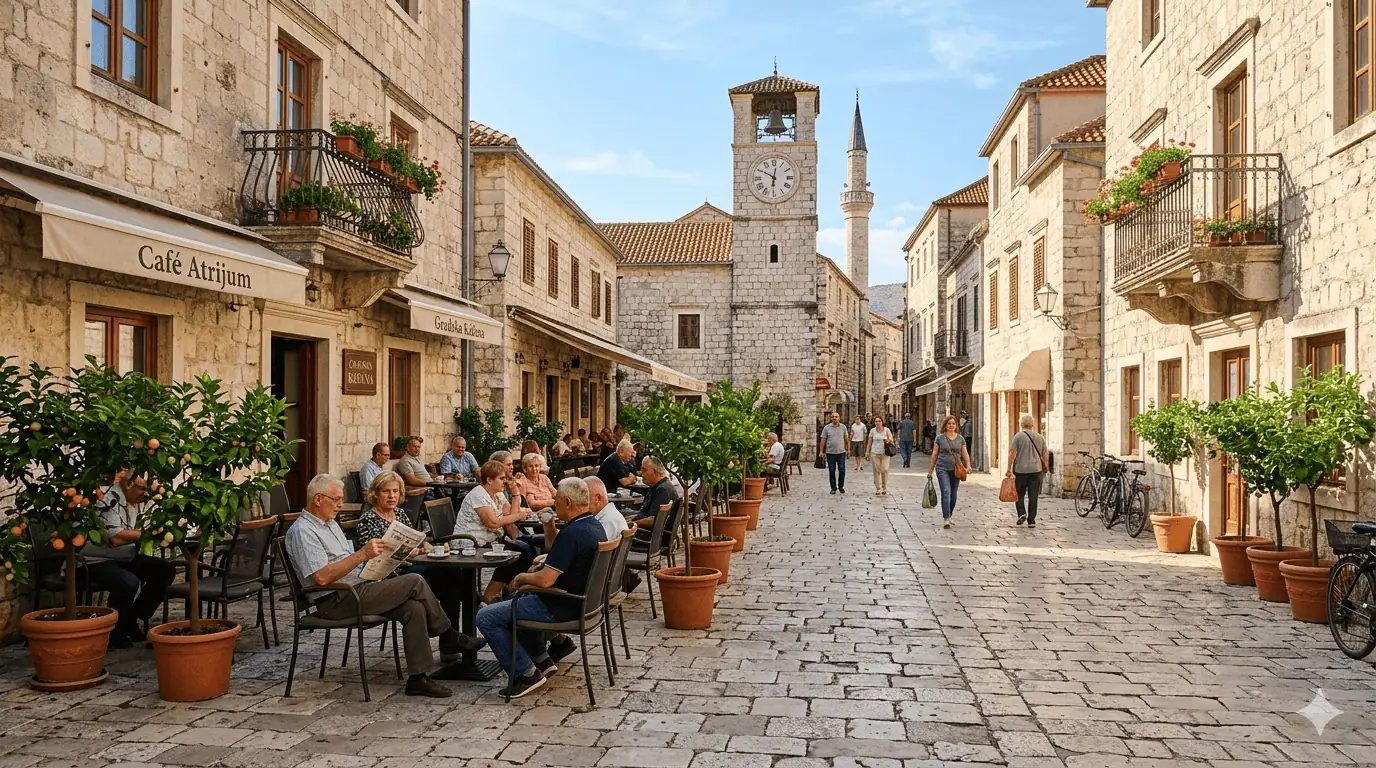
Imagine waking up to Mediterranean sunshine, sipping coffee at €1 while overlooking ancient stone bridges, and living comfortably on a fraction of what you’d spend in Western Europe or North America. This isn’t a fantasy—it’s daily life in Trebinje, Bosnia and Herzegovina’s hidden gem in the sun-drenched south.
For retirees seeking an affordable yet enriching lifestyle, Trebinje offers compelling economics alongside Old World charm. But what does it actually cost to live here? Whether you’re planning a permanent move or exploring options as part of returning to the Western Balkans, this comprehensive breakdown gives you the real numbers you need to make an informed decision.
Let’s dive into the practical costs of retirement living in Trebinje, from housing and healthcare to groceries and entertainment.
Housing Costs: Your Biggest Monthly Expense
Renting in Trebinje
Rental prices in Trebinje remain remarkably affordable compared to coastal Croatia or Montenegro, just minutes away across the border.
Monthly Rent Ranges:
- 1-bedroom apartment (city center): €250-€350
- 1-bedroom apartment (outskirts): €180-€250
- 2-bedroom apartment (city center): €350-€500
- 2-bedroom apartment (outskirts): €250-€350
- Small house with garden: €400-€600
Most rental agreements include basic maintenance, but utilities are typically separate. You’ll usually need to pay one month’s rent as a deposit plus the first month upfront. Rental contracts are straightforward, and many landlords are accustomed to working with retirees from the diaspora.
Buying Property
If you’re considering purchasing property, Trebinje’s real estate market offers excellent value:
- City center apartments: €800-€1,200 per square meter
- Residential neighborhoods: €600-€900 per square meter
- Rural properties with land: €400-€700 per square meter
Example costs:
- 60 sqm apartment in good location: €48,000-€72,000
- 100 sqm house with garden: €60,000-€90,000
Additional purchasing costs include notary fees (approximately 1%), property transfer tax (5%), and registration fees. These typically add 6-7% to the purchase price. Annual property tax is minimal, usually €50-€150 depending on property size and location.
Monthly Utilities Breakdown
Utility costs in Trebinje are reasonable, though they vary seasonally:
- Electricity: €40-€80 (higher in winter with heating, lower in summer)
- Water and sewage: €15-€25
- Heating (winter months): €60-€120 (depending on method: wood is cheapest, electric most expensive)
- Internet (high-speed): €20-€30
- Cable TV: €10-€15
- Trash collection: €5-€10
Total monthly utilities for a 2-bedroom apartment: approximately €150-€250, with winter months at the higher end.
Food and Groceries: Fresh, Local, and Affordable
Supermarket Shopping
Trebinje has several modern supermarkets (Mercator, Interex, Tuš) where prices remain significantly lower than Western Europe:
Common grocery prices:
- Bread (fresh, local): €0.50-€0.80
- Milk (1 liter): €0.80-€1.00
- Eggs (10): €1.50-€2.00
- Chicken breast (1 kg): €4.00-€5.50
- Beef (1 kg): €7.00-€9.00
- Local cheese (1 kg): €5.00-€7.00
- Tomatoes (1 kg): €1.00-€2.00 (seasonal)
- Potatoes (1 kg): €0.50-€0.80
- Olive oil (1 liter, local): €8.00-€12.00
- Wine (decent local bottle): €3.00-€6.00
Typical weekly grocery budget:
- Single retiree: €30-€50
- Retired couple: €50-€80
Dining Out
Eating out in Trebinje is a pleasure that won’t strain your budget:
- Espresso at a café: €0.80-€1.20
- Cappuccino: €1.50-€2.00
- Beer (0.5L): €1.50-€2.50
- Glass of local wine: €1.50-€3.00
- Budget restaurant meal: €5.00-€8.00
- Mid-range restaurant (3 courses): €12.00-€20.00 per person
- Pizza: €5.00-€9.00
- Traditional ćevapi meal: €4.00-€6.00
Many retirees find they can enjoy restaurant meals several times a week without worrying about the cost.
Local Markets: The Smart Shopper’s Secret
The farmers’ market (pijaca) operates year-round and offers incredible value, especially for seasonal produce. Vendors sell directly from their gardens and farms, meaning fresher food at lower prices:
- Summer tomatoes: €0.50-€1.00 per kg
- Peppers: €0.80-€1.50 per kg
- Figs, grapes, melons: €1.00-€2.00 per kg
- Homemade cheese: €4.00-€6.00 per kg
- Fresh eggs: €0.20-€0.30 each
- Honey (local): €8.00-€12.00 per kg
Regular customers often receive better prices and extra produce as vendors appreciate loyalty. Learning a few words in the local language helps build these valuable relationships.
Healthcare Costs: Quality Care Without Breaking the Bank
Public Healthcare System
Bosnia and Herzegovina has a public healthcare system that foreign residents can access. Once you establish residency, you can register for public health insurance:
- Monthly public health insurance contribution: €30-€50 (depending on your status)
- GP visit copay: €2-€5
- Specialist visit copay: €5-€10
The system covers most basic healthcare needs, including emergency care, hospital stays, and many medications at subsidized rates.
Private Healthcare
Many retirees prefer private healthcare for shorter wait times and English-speaking doctors:
- Private GP consultation: €20-€40
- Specialist consultation: €40-€70
- Dental cleaning: €30-€50
- Dental filling: €40-€80
- Dental crown: €150-€300
- Basic blood work: €20-€40
- X-ray: €25-€50
Private health insurance is also available through local and international providers, typically costing €50-€150 monthly depending on coverage and age. The insurance guide for expats compares this layer against travel insurance and the public system so you know what you’re actually paying for.
Prescription Medications
Pharmacy costs are reasonable, with many medications available without prescription that would require one elsewhere:
- Common antibiotics: €5-€15
- Blood pressure medication (monthly supply): €10-€25
- Diabetes medication: €15-€35
- Generic pain relievers: €2-€5
Many retirees also make short trips to Croatia (30 minutes away) where some medications and medical supplies are available through EU programs.
Transportation: Getting Around Without a Car
Public Transportation
Trebinje is highly walkable, but public transport is available:
- Local bus fare: €0.80-€1.00
- Taxi (in town): €3.00-€6.00
- Taxi to Dubrovnik airport: €40-€60
- Intercity bus to Dubrovnik: €5-€7
- Bus to Sarajevo: €15-€20
- Bus to Belgrade: €20-€25
Owning a Vehicle
If you prefer having your own transportation:
- Used car (5-10 years old): €3,000-€8,000
- Annual insurance: €200-€400
- Annual registration and inspection: €100-€150
- Gasoline (per liter): €1.30-€1.50
- Diesel (per liter): €1.40-€1.60
- Monthly fuel (moderate driving): €80-€120
- City parking: Free or minimal in most areas
Walking and Cycling
One of Trebinje’s greatest assets is its compact, pedestrian-friendly layout. The historic Old Town, main shopping areas, cafés, and most services are within a 15-20 minute walk. The flat terrain and mild climate make walking and cycling viable year-round, reducing transportation costs to nearly zero for daily activities.
Leisure and Entertainment: Living, Not Just Existing
Cultural Activities
Trebinje punches above its weight culturally:
- Cinema ticket: €3.00-€5.00
- Museum entry: €2.00-€4.00
- Concert or cultural event: €5.00-€15.00
- Annual cultural festival events: Many free
The city hosts numerous festivals throughout the year, including wine festivals, music performances, and cultural celebrations—most with free admission.
Fitness and Recreation
Staying active is both easy and affordable:
- Gym membership: €20-€35 per month
- Yoga or fitness class: €3.00-€5.00 per session
- Swimming pool (municipal): €2.00-€3.00 per visit
- Hiking, cycling, walking: Free
- Tennis court rental: €5.00-€10.00 per hour
The surrounding nature—from Popovo Polje’s cycling routes to nearby hiking trails—provides endless free recreation opportunities.
Social Life
Socializing is central to life in Trebinje and remarkably affordable:
- Wine tasting at local winery: €5.00-€15.00
- Day trip to Dubrovnik: €15-€30 (including transport and meals)
- Boat trip on nearby coast: €20-€40
- Montenegro day trip: €20-€35
- Book club or community group: Usually free
The café culture means you can spend hours socializing over a €1 coffee without any pressure to order more—a stark contrast to the rushed, expensive café culture elsewhere.
Additional Monthly Expenses
Communications
Staying connected is inexpensive:
- Mobile phone plan (unlimited calls/texts, generous data): €10-€20
- Prepaid mobile (per month): €5-€10
- Home internet (high-speed fiber): €20-€30
- Streaming services (Netflix, etc.): €8-€12
Personal Care
Personal services cost a fraction of Western prices:
- Men’s haircut: €5-€10
- Women’s haircut and style: €10-€25
- Manicure: €8-€15
- Massage (1 hour): €20-€35
- Basic toiletries (monthly): €20-€30
- Laundry detergent, cleaning supplies (monthly): €15-€25
Miscellaneous
- Home maintenance/repairs: €30-€50 monthly average
- Clothing: Significantly less than Western Europe (€50-€100 monthly if needed)
- Pet care (vet visit): €20-€40
- Pet food (monthly): €30-€60
Sample Monthly Budgets: What Does It All Add Up To?
Modest Lifestyle (Single Retiree)
- Rent (1-bedroom, outskirts): €220
- Utilities: €120
- Groceries: €180
- Dining out (4-5 times/month): €40
- Healthcare/medications: €50
- Transportation: €30
- Internet/mobile: €35
- Entertainment/leisure: €40
- Personal care: €30
- Miscellaneous: €50
Total: €795 per month
Comfortable Lifestyle (Retired Couple)
- Rent (2-bedroom, city center): €420
- Utilities: €180
- Groceries: €320
- Dining out (8-10 times/month): €120
- Healthcare/insurance: €120
- Car expenses (fuel, insurance, maintenance): €180
- Internet/mobile: €50
- Entertainment/leisure: €100
- Gym memberships: €50
- Personal care: €60
- Travel/day trips: €100
- Miscellaneous: €80
Total: €1,780 per month
Comfortable Lifestyle with Owned Property (Retired Couple)
Same as above but subtract rent (€420), add property tax and maintenance (€80):
Total: €1,440 per month
Comparison Context: This comfortable lifestyle in Trebinje costs roughly equivalent to:
- Basic survival in London, Paris, or New York
- Modest lifestyle in smaller Western European cities
- 40-60% less than equivalent lifestyle in coastal Croatia or Montenegro
Money-Saving Tips for Retirees
Shop seasonally at the market: Summer abundance means you can buy produce in bulk and preserve it. Locals pickle peppers, make ajvar (pepper spread), and preserve tomatoes—learn these skills and save significantly.
Learn key phrases: Even basic Bosnian/Serbian goes a long way. “Koliko košta?” (How much?) and “Može li popust?” (Can you give a discount?) can lead to better prices, especially with regular vendors.
Build local relationships: Regular customers get preferential treatment. Your favorite café might start giving you stronger coffee, the butcher might throw in extra, and the market vendor will save the best produce for you.
Take advantage of proximity to borders: Croatia (EU) is 30 minutes away, offering access to some EU-priced goods and medications. Montenegro is equally close. Strategic shopping trips can yield savings on specific items.
Embrace the local lifestyle: Expensive imported goods add up. Local wines rival expensive imports, regional produce is fresher and cheaper, and traditional dishes are both delicious and economical.
Time your utility usage: Electricity has cheaper night rates. Run washing machines, dishwashers, and other heavy appliances during off-peak hours.
Use wood heating strategically: If your property allows it, supplementing electric heating with a wood stove (drva costs €40-€60 per cubic meter) can cut winter heating costs significantly.
Hidden Costs to Consider
While Trebinje is affordable, budget for these often-overlooked expenses:
Visa and residency permits: Initial temporary residence permit costs approximately €100-€150, with renewal fees every year or two until you qualify for permanent residency.
Currency exchange: If your pension comes in USD, EUR, or GBP, converting to Bosnian Marks (BAM) incurs exchange fees. The BAM is pegged to the EUR (1 EUR = 1.95583 BAM), making euros practical for many transactions. Budget 1-3% loss on exchanges.
International money transfers: Bank wire fees can be significant (€15-€40 per transfer). Services like Wise or Revolut offer better rates for regular pension transfers. If you plan to open a local account, the banking guide for foreigners covers which banks work in Trebinje and what to bring.
Travel to home country: Budget for annual or bi-annual trips home to visit family. From Trebinje, you’re 30 minutes from Dubrovnik airport (flights to major European cities €50-€200) or can drive to Split, Sarajevo, or Belgrade airports.
Import duties on personal items: Shipping personal belongings or receiving packages from outside Bosnia may incur customs duties and VAT (17%).
Professional services: Lawyer fees for residency applications, accountants for tax filings if needed: €300-€800 annually.
The Bottom Line: Exceptional Value for Retirees
A single retiree can live comfortably in Trebinje on €800-€1,000 monthly, while a retired couple can enjoy an excellent quality of life on €1,400-€1,800 monthly. These budgets include:
- Safe, comfortable housing
- Fresh, healthy food
- Regular dining out and social activities
- Healthcare coverage
- Entertainment and cultural activities
- Short trips and exploration
Compare this to retirement in Western Europe where similar lifestyles demand €2,500-€4,000 monthly, or North American cities requiring $3,000-$5,000. Trebinje delivers Mediterranean climate, rich culture, excellent food, and genuine community at a fraction of the cost.
But perhaps more valuable than the financial savings is what money can’t fully measure: the slower pace of life, the genuine human connections, the daily sunshine, the sense of safety, and the feeling that life is meant to be savored, not rushed through. In Trebinje, your retirement savings don’t just last longer—they buy you a richer, more fulfilling daily experience.
Whether you’re from the diaspora exploring a return to your roots, or simply seeking an affordable European retirement destination with character and charm, Trebinje offers compelling economics wrapped in authentic Balkan warmth.
Ready to explore your retirement options in Trebinje? The numbers speak for themselves, but the real value becomes clear only when you experience it firsthand. Visit, stay awhile, and discover if this sun-soaked corner of Bosnia and Herzegovina could be your perfect retirement destination.
Currency Note: All prices listed are approximate and based on 2024-2025 rates. Exchange rate: 1 EUR = 1.96 BAM (Bosnian Convertible Mark) | 1 USD ≈ 1.80 BAM
Have questions about retiring in Trebinje? Share your concerns in the comments below, and our community of expats and returnees will help provide answers.