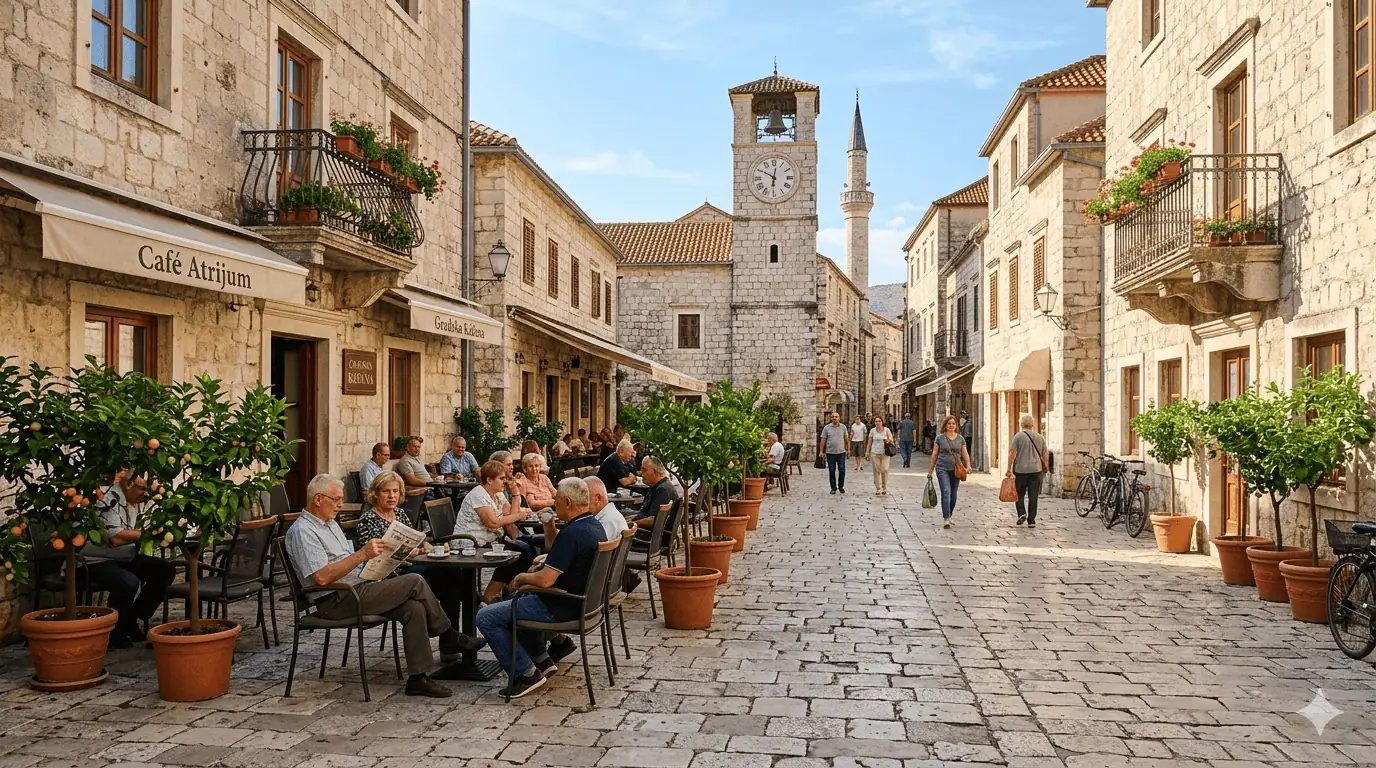
Ask someone where digital nomads go in the Balkans and they will say Belgrade, Sarajevo, maybe Budva by the sea. Nobody says Trebinje — and that is exactly why it works. This small city in the far south of Bosnia and Herzegovina, twenty minutes from Dubrovnik and surrounded by vineyards and the Trebišnjica river, is quietly becoming one of the most practical places in Europe to work remotely: fast fiber internet, a monthly cost of living that stays under €900, a Mediterranean climate, and a pace of life that lets you actually get work done.
There is no coworking space with a lounge and a latte menu, no nomad community app, no Instagram-famous café with laptops on every table. That is precisely the point. In a region where every other destination has optimized itself for content creators, Trebinje remains unpolished, affordable and real — three years in, I can confirm it is one of the most underrated bases in the Balkans for remote work.
If you are weighing Trebinje against a more obvious nomad hub, the honest Trebinje vs. Mostar comparison does the legwork — but the short version is this: the internet holds up for video calls, a furnished one-bedroom in the centre rents for 250–400 €, and the position next to the Adriatic turns the whole southern Balkans into your weekend playground. The longer version — apartments, SIM cards, visas, coworking spots and the honest winter — is what follows.
Here is how to set it up properly.
The internet is the real story
Fiber is available across most of the centre, delivered by m:tel and Telemach, and speeds hold up even during peak hours — expect a comfortable 50–100 Mbps in most modern apartments. Ask any landlord for a connection test before you sign — you want the fiber, not the copper. For video calls, the river terraces have good enough signal; the old town’s stone walls do not. Book calls accordingly.
For days when you need to leave the flat, grab a tourist SIM — m:tel offers around 20 GB for roughly 15 BAM (under €8), and it doubles as a backup hotspot that has saved more than one call for me. If your phone supports it, a regional eSIM that covers Bosnia, Croatia and Montenegro is worth the few extra euros for the day-trip season.
What it actually costs
The honest numbers, in euros, for a single person renting a furnished one-bedroom in the centre:
- Rent: 250–400 € depending on season and renovation. Airbnb runs higher; walk in and negotiate for anything longer than a month.
- Utilities + internet: 60–90 €.
- Groceries: 150–250 € if you cook.
- Eating out: cheap. A coffee is 1–1.5 €; a tavern lunch is 8–12 €. Full rundown of where locals actually eat.
- Coworking: 50–100 € per month if you want a desk; the cafés will cost you a coffee or two instead.
Add it up and a comfortable nomad month lands around 700–900 €. That is not “cheap as Southeast Asia” cheap. It is “Western European quality of life at Eastern European prices” cheap, which is the part nobody tells you about. A good chunk of that eating budget goes on the bakeries and the breakfast ritual — which, trust me, is money well spent.
Money-wise, Bosnia runs on the convertible mark (BAM), pegged to the euro at roughly 1.95. Cards are accepted in supermarkets and nicer restaurants, but keep cash for the small cafés and the green market — and carry a card that refunds foreign ATM fees, because most daily life here still runs on banknotes.
Where to live
The old town is pretty and loud on weekends. The streets just across the river — around the main boulevard — are quieter, with better apartments and balconies. Two neighbourhoods keep coming up for nomads who stay: Police and Bregovi, quiet residential areas within a ten-minute walk of the centre that have the best stock of modern apartments and the least noise. Families looking for a longer stay should look toward the residential hills above the centre, where the real Trebinje lives.
Book your first month through Airbnb or a guesthouse, then walk the streets and talk to landlords directly — the moment a local sees you’re staying, rent drops and you get the honest apartment.
Working outside the flat
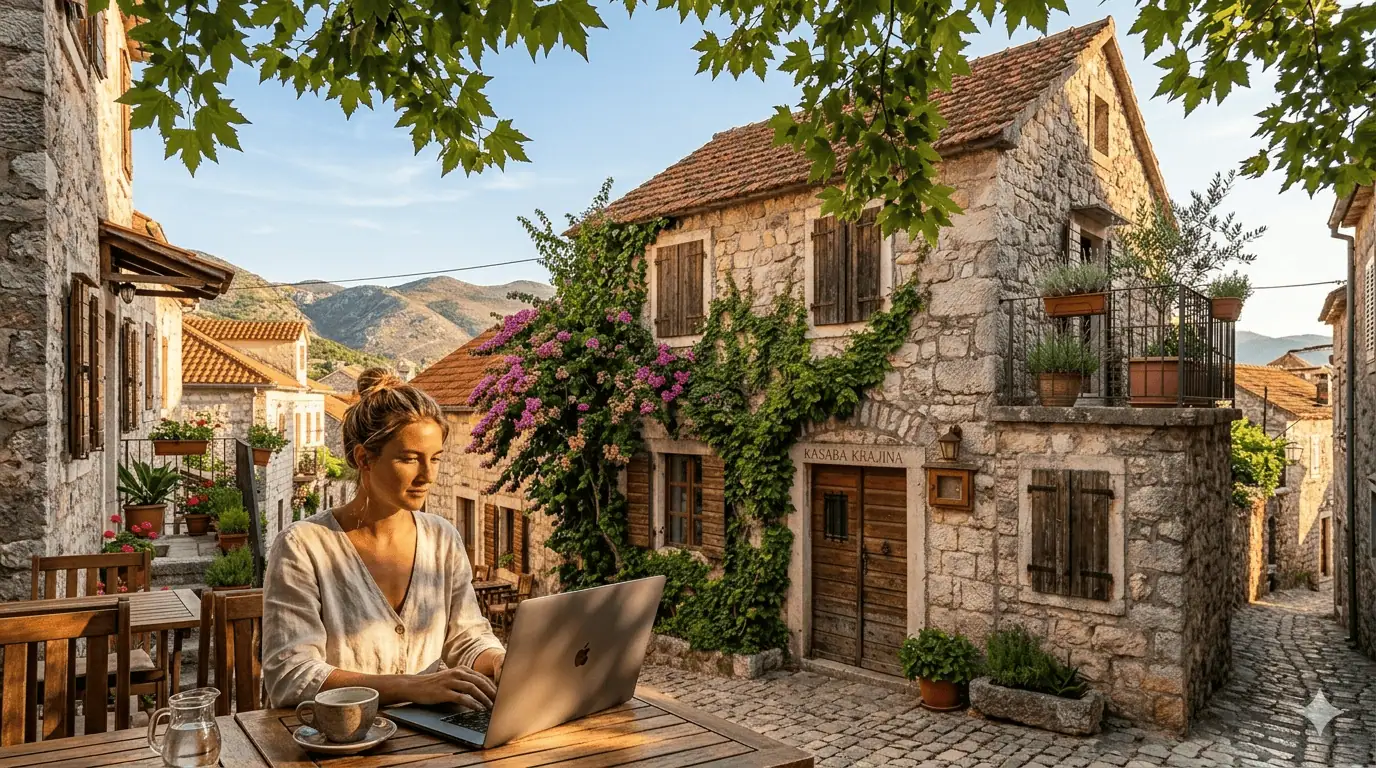
There is now a proper coworking space — NOMAD Coworking — built for freelancers and remote professionals who want a quiet desk and a bit of community. Before that existed, the answer was the cafés, and it still is for many of us. Kafeterija Fontana is the reliable one for work: spacious, quiet in the mornings, dependable Wi-Fi. The Platani cafés under the plane trees are where everyone ends up socially, but treat those as your lunch break, not your office. For the full rundown — which cafés actually hold up for laptop days, the cash-only etiquette and IPC Trebinje, the 24/7 coworking centre at the bus station — see the cafés and coworking guide.
For a change of scene, the public library has quiet reading rooms, and the city centre is small enough that your “office view” can rotate weekly without costing you travel time.
Visas, in plain terms
Bosnia has no dedicated digital nomad visa, and that matters less than you think. Most Western passport holders — EU, US, UK, Canada, Australia — enter visa-free for up to 90 days, and because Bosnia is not in Schengen, those days do not count against your Schengen allowance. That makes Trebinje a genuinely clever hub for rotating through European destinations.
Register your stay with the local police within a few days of arriving (a hotel or guesthouse will do it for you; in a private rental, you do it yourself). For anything beyond 90 days, the route is a temporary residence permit — a bit of paperwork, proof of income and accommodation, and usually a €50–100 fee. It is bureaucratic, not difficult, and locals will help you navigate it.
Getting around
You will not need a car in town — Trebinje is walkable end to end. But the position is the hidden weapon. Daily buses run to Dubrovnik (about €15), Mostar (about €12) and Kotor (about €18), which means the Adriatic, the old stone of a second country and the bay of Kotor are all weekend trips, not logistics projects. Bikes rent for a few euros a day from a couple of hotels if you want to stretch your legs along the river.
Closer to home, the surrounding countryside is where the city spends its weekends — the vineyards and taverns of the wine country weekend loop are a short ride out of town and the best cheap escape from the laptop.
The winter
Honest warning: December and January are quiet. Some places close. But the light, the empty cafés and the woodsmoke make it my favourite season. You will not be lonely; you will be left alone, which is not the same thing. It is also when landlords negotiate hardest — a winter let can come with a genuinely surprising discount if you ask.
In Sarajevo I was always busy. In Trebinje I finally did the work.
The verdict
Trebinje is for the remote worker who has outgrown the hype cycle — who wants fast internet, low rent, good food and an actual life rather than a content calendar. Set it up right, and you may find, as I did, that a month turns into years.