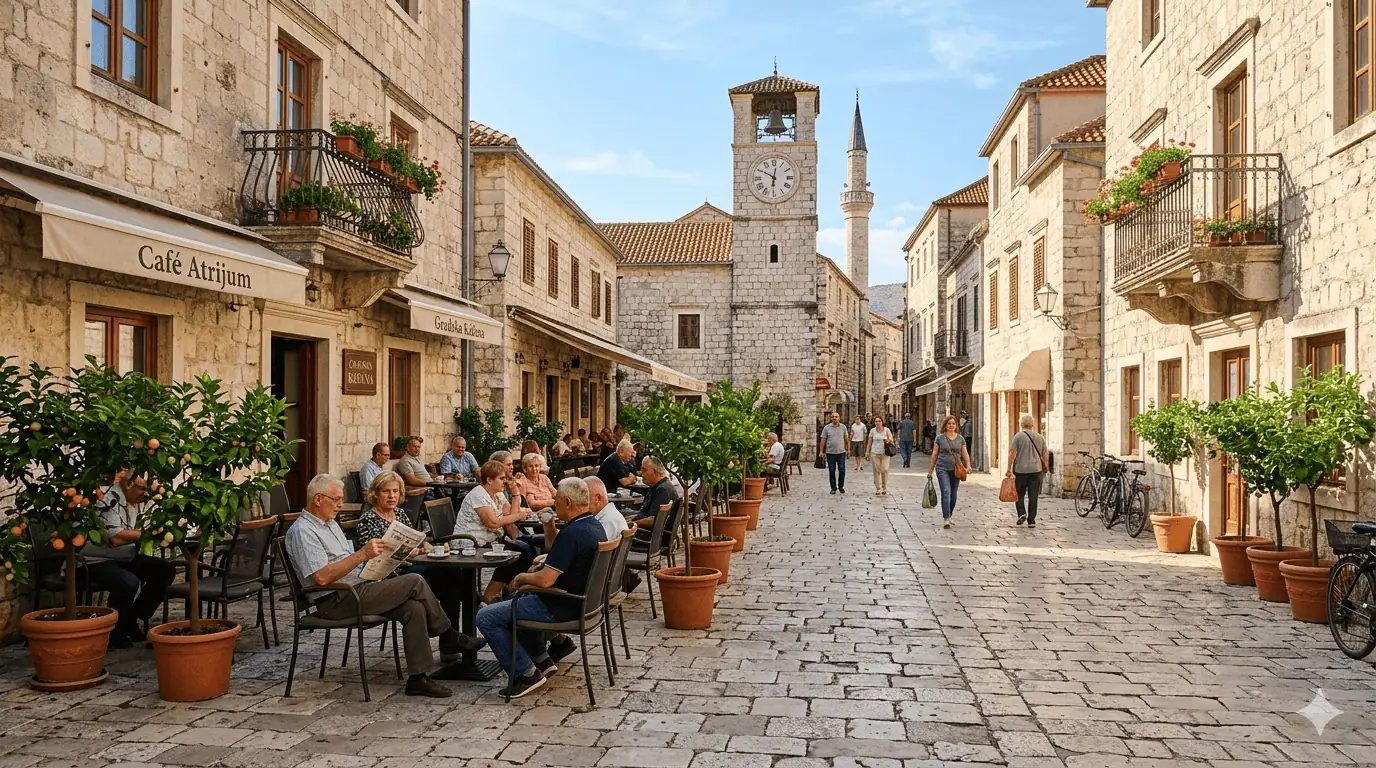
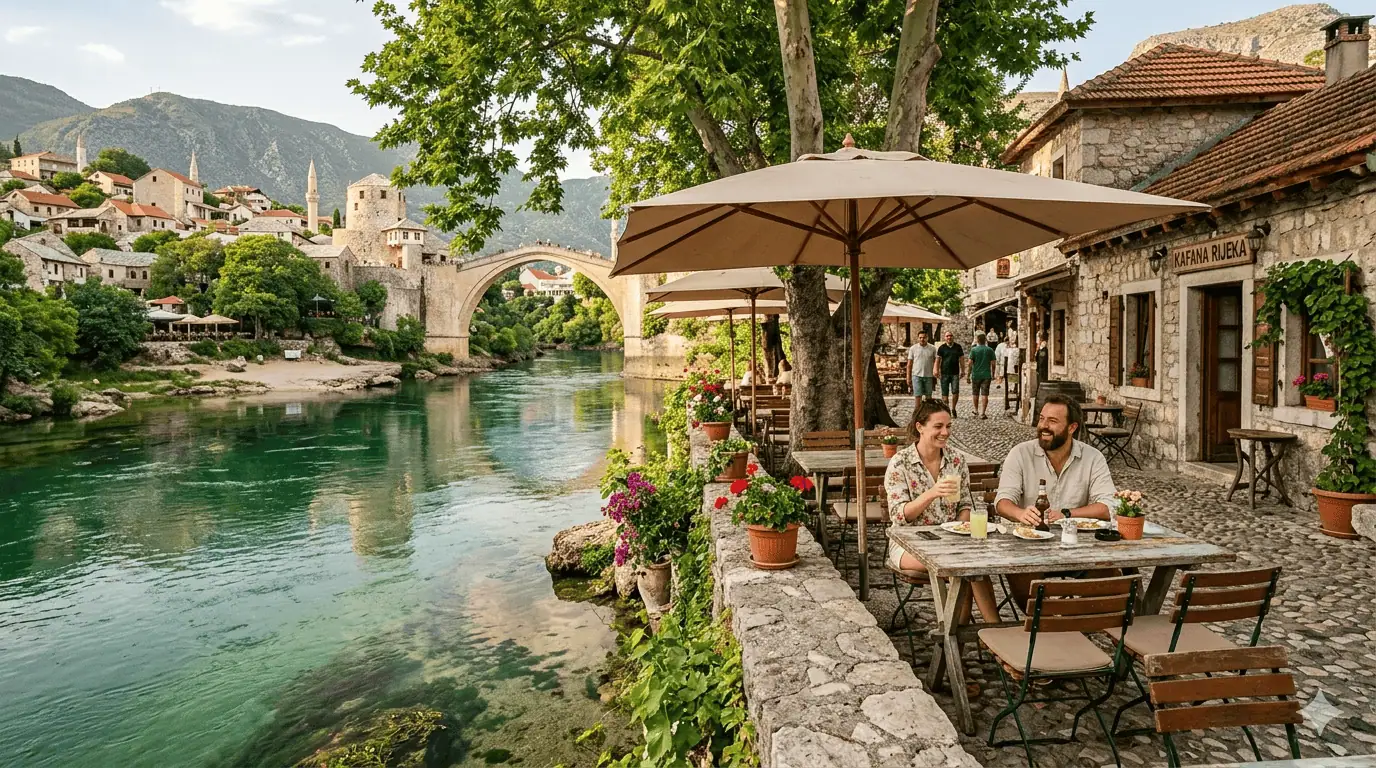
In Trebinje, a meal is not a transaction. It is a negotiation about how long you are willing to stay. The waiters do not hurry you because the owners do not hurry them, and the owners do not hurry anyone because they have seen, a thousand times, what happens to people who rush a good lunch.
Trebinje sits at the crossroads of four food cultures. From the old town you can eat lamb and veal cooked under the sač the way the Herzegovina villages have for centuries, hop a bus for a Dubrovnik seafood dinner, and be back in time for a nightcap of rakija — all in one day. That position, plus prices that rarely surprise, makes it one of the most underrated eating scenes in Bosnia and Herzegovina.
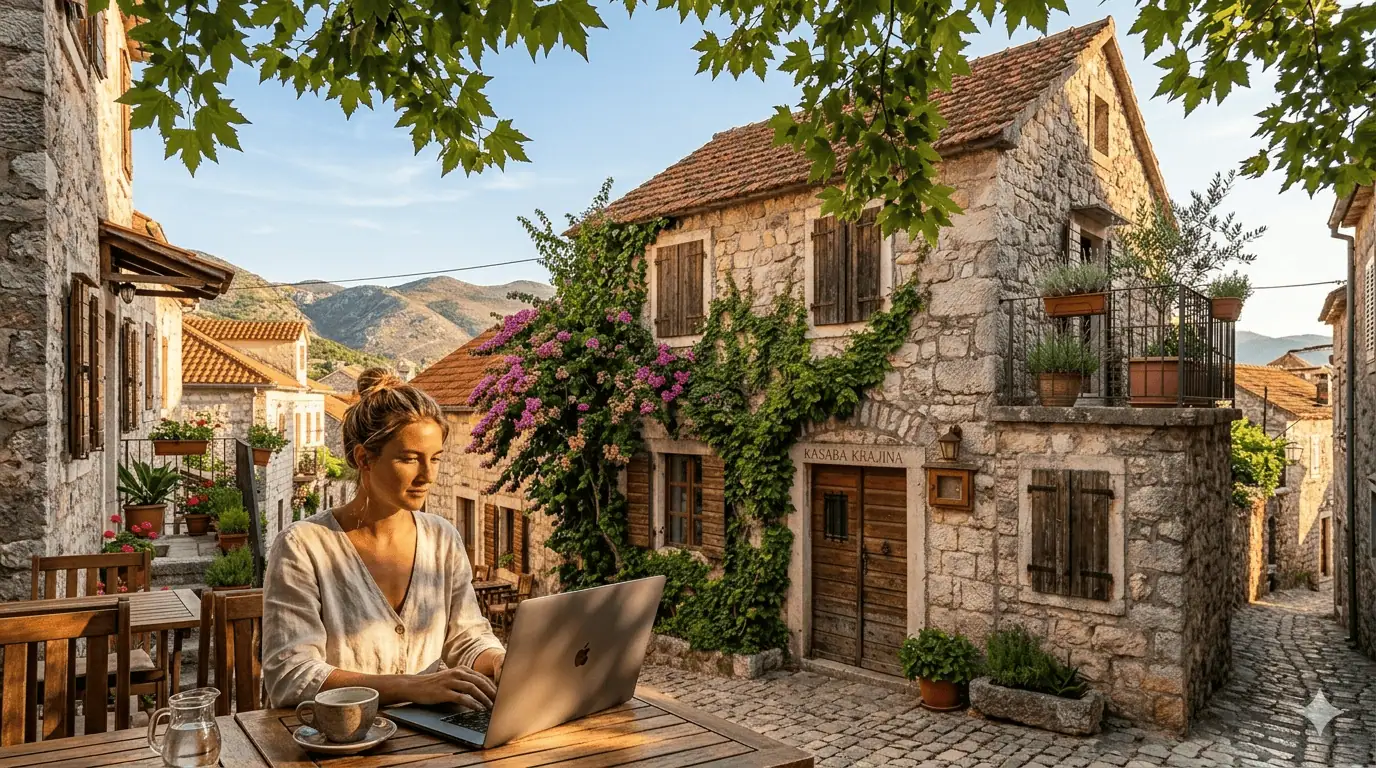
Whether you are here for a long stay as a digital nomad or a weekend between Dubrovnik and Mostar, here is where we actually eat.
The bakery that opens before sunrise
On Kneza Miloša, before the street is awake, the baker at Pekara Stari Grad is already pulling the first trays from the oven. Go at seven and you will find the burek still hissing, the pogača still soft in the middle. Take a paper bag of anything warm, find the river wall, and eat it there. It is the single best five marks you will spend in Trebinje.
A quick note on Balkan pie etiquette: in Bosnia, “burek” strictly means the meat version. The cheese one is sirnica, the spinach one zeljanica, and the potato one krompiruša — order by name and you will look like you have been here longer than you have.
Breakfast, the Herzegovina way
For something slower than a bakery run, find a table at a kafana and order what the region does better than anywhere else: uštipci — fluffy fried dough balls — served with kaymak and a pot of the local honey, or warm palenta under a blanket of young cheese with a glass of kiselo mlijeko (sour milk). Simple, filling, and closer to the mountain villages than to anything you will find on a tourist menu.
A long lunch in the old town
Taverna Stara Kapetanija looks like a tourist restaurant until you notice that half the tables are occupied by people who clearly know the staff by name. Order the teletina ispod sača — veal cooked under a metal bell buried in embers — and let the bread do the mopping. The wine list is short, local and honest.
Everyone wants the special menu. The special menu is whatever we ate last night.
If you want the modern take on the same tradition, Restoran Humsko hides in a restored stone building by the river near the bridge — small menu, serious ingredients, and a leafy garden that stays cool even in August. Their grilled mixed meat and a bottle of their own Humsko table wine make it the best “hidden gem” answer in town.
Taverns worth the drive
The old town covers the essentials, but the countryside taverns are where Trebinje does its most serious cooking. All of these are a short taxi ride away and are worth it:
- Tarana Vinogradi — in the village of Tuli, five minutes from town. Stone terraces among the vineyards, slow-cooked dishes and grilled meats. Book in spring and autumn; it fills fast.
- Stara Hercegovina — just down the same road, an ethno-style garden where the lamb and veal under sač are the whole argument.
- Hotel Studenac — riverside tavern with a big summer garden. The trout comes fresh from the Trebišnjica, and it tastes like it.
- Kukurića Vrtovi — a countryside ethno-garden for a long family lunch under the trees.
Grilled trout and river fish
Trebinje is a river city, and the fish on the table reflects it. The pastrmka (trout) here is not the frozen supermarket kind — it is pulled from the Trebišnjica and cooked simply with a little butter, garlic and parsley. Restoran MG, tucked under Leotar hill in the centre, is the reliable local favourite for trout and grilled meats at honest prices. For a fancier seafood evening, Restoran Galija does Adriatic fish and octopus with a proper restaurant feel.
Wine, properly
The serious wine drinkers leave town for the day — the Tvrdoš monastery route is an essential pilgrimage, detailed elsewhere — but you can do very well without leaving the centre. The cellars along the main street will happily pour you a vranac or a žilavka straight from the barrel. Ask for the year, not the label.
For the full experience, Vinska Galerija Vukoje sits on a hill above the city with panoramic views and pours some of Herzegovina’s best-known wines. It is the place for the sunset glass, not the quick lunch.
The list, short and honest
- Pekara Stari Grad — for first light. Burek and pogača.
- Stara Kapetanija — for a proper lunch in the old town.
- Restoran Platani — for dinner under the plane trees on the square.
- Restoran MG — for trout and grilled meats, locals’ choice.
- Tarana Vinogradi / Stara Hercegovina — for the countryside sač pilgrimage.
- Vinska Galerija Vukoje — for the sunset wine with a view.
- The riverside terraces — for coffee that lasts an hour and costs nothing. The cafés and coworking guide has the full rundown for laptop workers.
Eat slowly
The universal rule: if the menu is laminated and the bread is cold, leave. If the owner is arguing with the butcher on the phone, stay. Trebinje feeds you at its own pace, and its pace is the point.
For the ingredients behind all of it — the cheese, the honey, the rakija from the green market — read our guide to the markets and producers of Trebinje, and for the wine route that leaves town, start with our weekend in wine country.