Herzegovina has been growing wine since the Romans, and Trebinje sits at the centre of the best of it. Two grapes rule here — Vranac, dark, warm and built for cured meat, and Žilavka, the white that carries the region’s limestone minerality. The classic excursion, the Tvrdoš route, can be done in an afternoon, but a weekend is the right answer. This is the honest version, with distances, times and grapes.
Day one: the monastery and the cellars
Drive the ten kilometres north from the centre to the Tvrdoš monastery, planted on its rise above the valley like something from a catechism. The winemaking tradition here is roughly five centuries old, and it survived a few wars to prove it. The monks work around 160 hectares of vines across the Trebinje and Popovo fields, and their wines are exported to more than fifteen countries — but the cellar you taste in is the original, where Vranac still ages in century-old oak.
The winery has two cellars, and the contrast is the point: the old stone cellar from the 15th century, and a modern gravity-flow facility ten metres away on the bank of the Trebišnjica. Old and new, separated by a river and nothing else.
After Tvrdoš, loop toward the village cellars that cluster along the valley. The family producers are the real experience: someone’s grandfather’s vines, a barrel room under the house, and a glass poured with the confidence of a man who has nothing to prove. Many are part of the Herzegovina Wine Route, the marked trail of family wineries that runs across the region, and almost all of them sit within a fifteen-minute drive of the centre.
The grapes, quickly
Before you pour, the names worth knowing:
- Vranac — the red, Trebinje’s own. Dark and warm, at home with grilled meat and a plate of local cured ham.
- Žilavka — the white, all mineral and stone. The best of it smells like the hills after rain.
- Blatina — a red you will see on the Mostar side of the route; lighter, softer, worth trying if you drive further west.
Day two: the long lunch
The best ending to the route is not another cellar but a table. Any of the taverns between the monastery and the border will do; the one you want is the one with the longest-serving family. Order the Vranac, and let the where-to-eat list steer you — the countryside taverns in the hills above town pair the same limestone soil with lamb under the sač.
You can taste the limestone. Everything about this place is the limestone.
For the sunset glass, Vinska Galerija Vukoje is the modern one — a gallery perched on a hill above the city with panoramic terraces and some of the region’s most awarded wines. It is touristy in the way that earns it: the view is real, and so is the wine.
Practical notes
- Distance: 10–15 km each way; the loop is easily done by car, tricky by bike unless you like hills. Getting there and around town is covered in our getting around guide.
- Time: a full day if you add a lunch; two days if you do it properly.
- Tastings: most cellars charge roughly 10–25 € per person and will happily pour through three or four wines with a little cheese.
- Language: a little English works at the monastery; in the villages, handshakes and “živjeli” do more.
- Buying: bottles are 8–20 € and travel well. Buy a case; you will regret it if you don’t. The cellars accept cash more reliably than cards.
- Season: May to October for vineyard air and long light. Winter is calm and suits cellar-first tasting.
The return
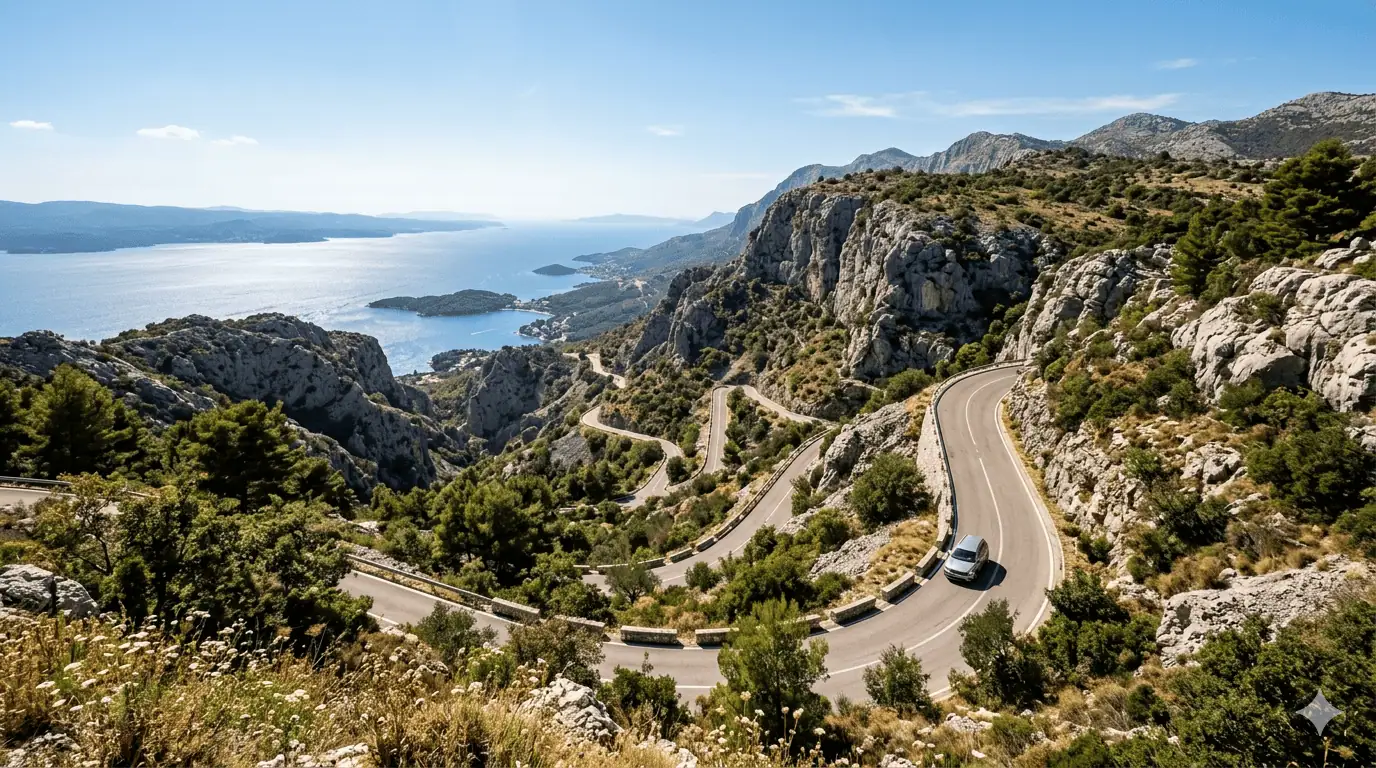
The best part of the route is the drive home in the long light, the valley sliding past below you. Pull over at the viewpoint above the town once, just to watch the roofs settle into evening. Then go and sit by the river with what’s left of the day — and if you came for a longer stay, the case of wine will make the rest of it taste better. That is the wine route, finished properly.
For the food that goes with the wine, start with our markets and producers guide — the cheese and honey on your board all come from the same hills — and if you are planning the trip around remote work, our digital nomad guide covers how to set up a base in Trebinje while the vineyard weekends sort themselves out.