Trebinje is small enough to walk and awkward enough to need a plan. In three years I have walked it, driven it, missed buses and ridden a train that felt like a time machine. This is everything I learned about getting around, so you don’t have to.
On foot
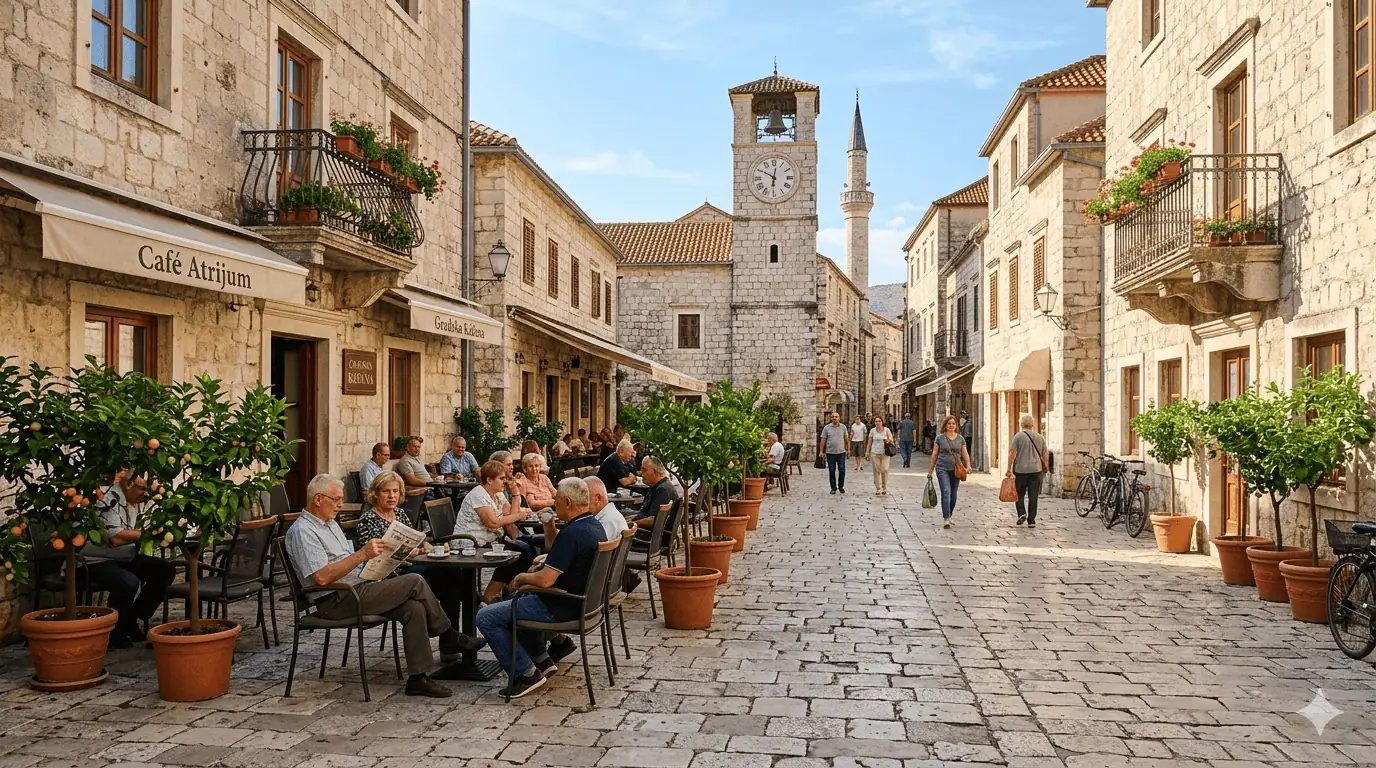
The centre — old town, riverfront, main square — is comfortably walkable. Nothing you need is more than twenty minutes away. In practical terms: from the old town to the bus station is about fifteen minutes on foot, and the best coffee is always on the route you didn’t plan. The hills above the centre are another matter; locals drive even short distances uphill, and you should too. Our walking route through the old town is the best way to see the centre’s corners before you start clocking distances.
By car
A car is the difference between Trebinje as a town and Trebinje as a base. Parking in the centre is free and generally easy; the weekend festival days are the exception. Drive carefully in the old town’s alleys — the walls are older than your insurance. Renting from the airport agencies in Dubrovnik or Podgorica is straightforward, and a week’s rental runs roughly 200–350 € with full insurance, which pays for itself on the wine route weekend alone. It also opens the three big exits — the Dubrovnik, Mostar and Kotor day trips — which is why most people bother renting at all.
The regional road network is good, but remember the currency hand-off: Bosnia runs on the convertible mark (BAM), while Croatia and Montenegro use the euro, so keep a little of each for tolls and border coffee.
By bus
The bus station covers the essentials: Sarajevo, Mostar, Dubrovnik, Herceg Novi and the Montenegrin coast — and if you’re weighing Trebinje against Mostar as a base, the city comparison does the maths on both ends of that route. The standout destination is Dubrovnik: roughly 50 minutes and about 20 € each way, with a couple of daily departures — mornings are the reliable ones. For Herceg Novi and the Bay of Kotor, services run several times a week and cost around 10 €. Timetables are honest but sparse — build your day around one departure, not the reverse. Tickets are bought at the window; the drivers do not take cards, so carry cash in the local currency. Live schedules are worth checking online before you set out — bus timetables from the station and cross-border routes — since holiday weekends shuffle everything.
By train
Ride the Čapljina–Trebinje line at least once. It is slow, infrequent and possibly the most charming hour of transport in the Balkans — the karst, the valley, the little stations where the conductor knows everyone. It is not a practical commuting option. It is a pleasure. The single-track line clings to the edge of the Trebišnjica for much of the way, and if the weather is good the windows turn the whole trip into a slow film of the valley. Time your ride with the day’s schedule — the official timetable is the one to trust, because there is no app for this line.
Taxis and apps
Taxis are metered and reasonably priced for the region — a ride across town lands around 3–5 € — but agree the fare before longer rides, especially to the taverns or the monastery. Ride-hailing apps work in the larger cities nearby, but inside Trebinje the local dispatchers are faster. Save one number to your phone before you need it. For the day-trip lunch spots in the hills, a taxi both ways is often cheaper than a second glass of wine you will not regret skipping.
Getting to Trebinje
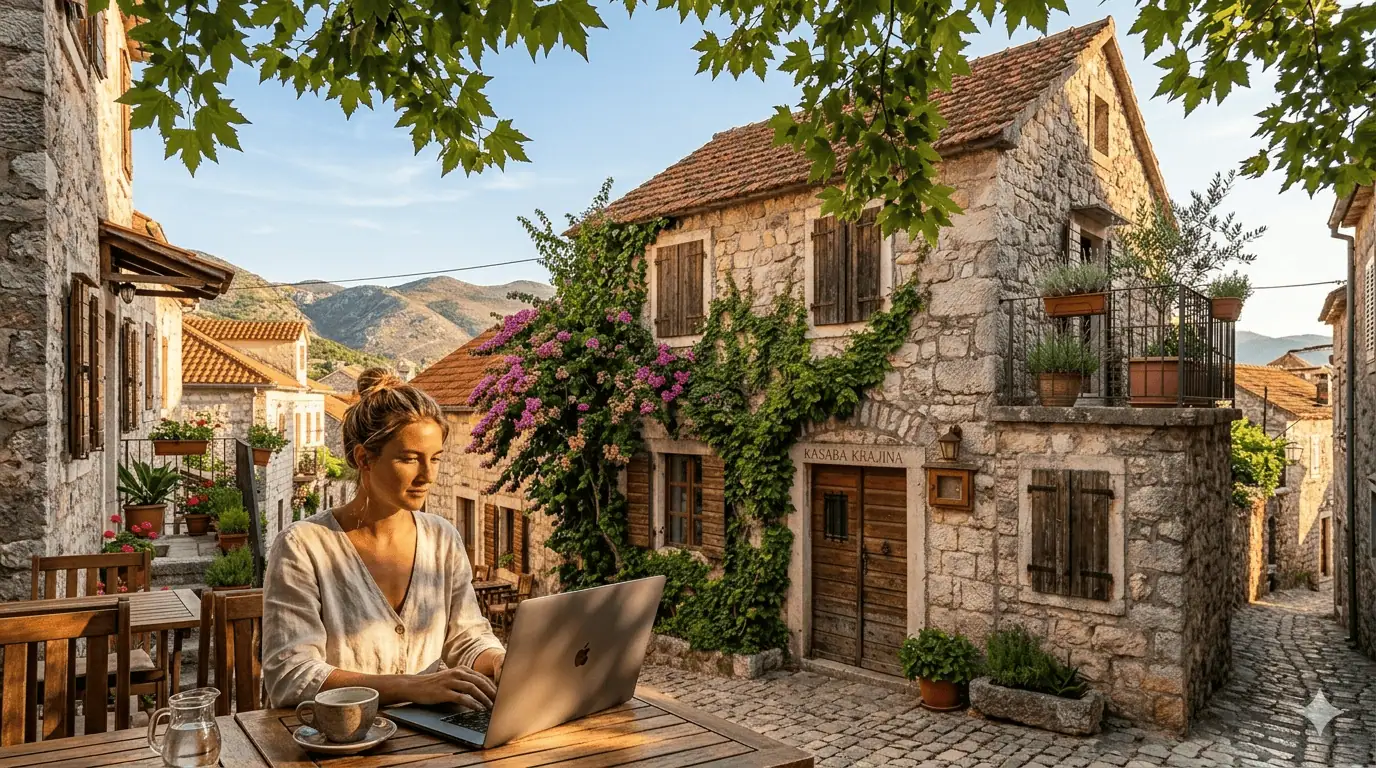
The nearest international airport is Dubrovnik, thirty minutes away by road, with Podgorica a comfortable two hours as the alternative. From Dubrovnik airport, a taxi to Trebinje runs around 40–50 € or the equivalent in shared arrangements; the airport is on the Croatian side, so carry your passport for the crossing. Most visitors fly into Dubrovnik, spend the night in Trebinje, and discover the city is the easier base than the coast — cheaper, quieter, and twenty minutes from the airport rather than an hour of Dalmatian traffic.
The summary
- In town: walk. Take a taxi at night.
- For the region: rent a car; it pays for itself in one day trip.
- For distant cities: bus or a shared ride. Dubrovnik is fifty minutes and pocket change.
- For the soul: the train, once, in good weather.
Trebinje rewards the visitor who treats transport as part of the day rather than an interruption of it. And if you are weighing the logistics against the lifestyle, the digital nomad guide covers what it costs to make this your base rather than your stopover.