You land in Trebinje and the first thing you notice is the quiet. Not the silence of an empty place — the quiet of a town that is confident enough not to shout. Cars pass politely. Someone is sweeping a stoop. The air smells of pine and, faintly, of woodsmoke. There is no rush, and the town wants you to know it.
Most visitors arrive from Dubrovnik, half an hour up the road, carrying a checklist and a car. This plan is for that morning. It is deliberately small, it is entirely on foot, and by lunchtime you will have understood why people who come for a day never quite leave.
Walk the old town before the heat
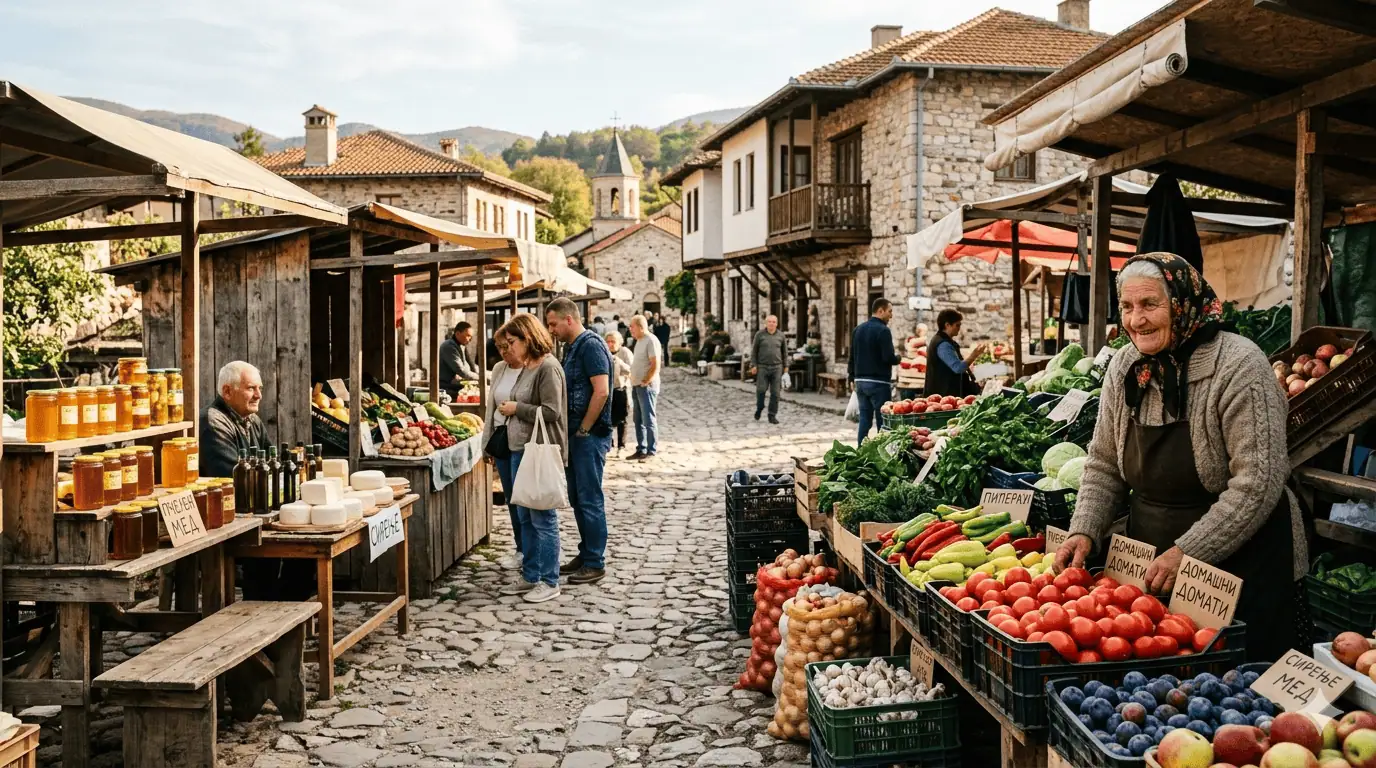
Start at Trg slobode, the main square, and wander south into Stari Grad while the light is still soft. From seven-thirty the farmers are already setting up at the market on the square’s edge — the guide to Trebinje’s markets and producers tells you what to buy — but resist the bags for now. The old town is compact, crossable in twenty minutes, but it rewards slow feet. Look for the Ottoman-era houses with their wooden balconies, the stone stairs that lead nowhere you planned, and the views down toward the Trebišnjica at the end of almost every alley.
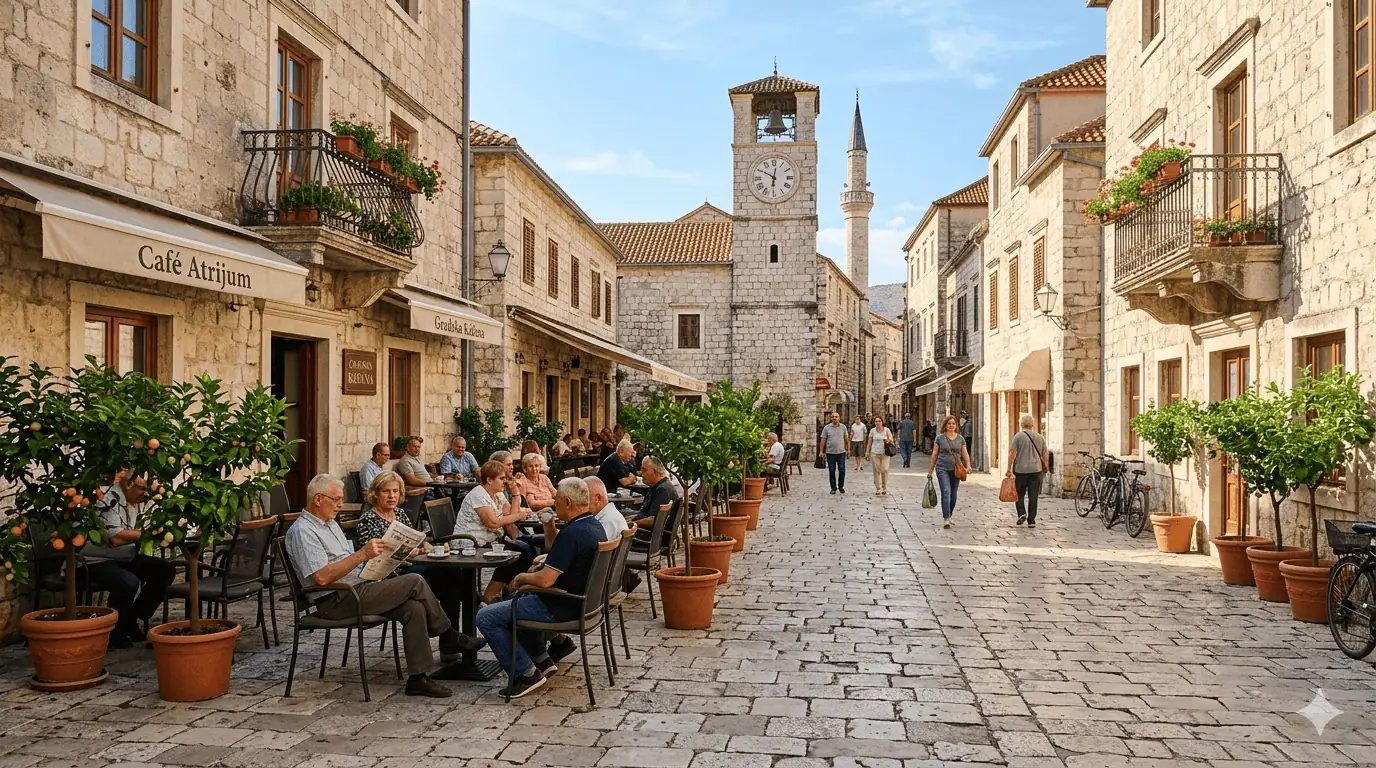
If you want the names of what you are passing, the old town walking guide walks it door by door: the canal gate where the drawbridge once hung, the Sahat-kula clock tower still ticking from Ottoman days, the two mosques that anchor the quarter. But on a first morning, let the alleys be anonymous. The naming can come later.
Breakfast at the bakery
By eight the street smells of baking. On Kneza Miloša, Pekara Stari Grad has had the oven lit since five, and the burek still hisses when they hand it over. Take it in a paper bag — it costs pocket change — find the river wall, and eat it looking at the water. It is the best breakfast in town, and it has been the best breakfast in town for three generations. For the longer version of the town’s breakfast scene, the where-to-eat guide is the place.
Coffee, properly
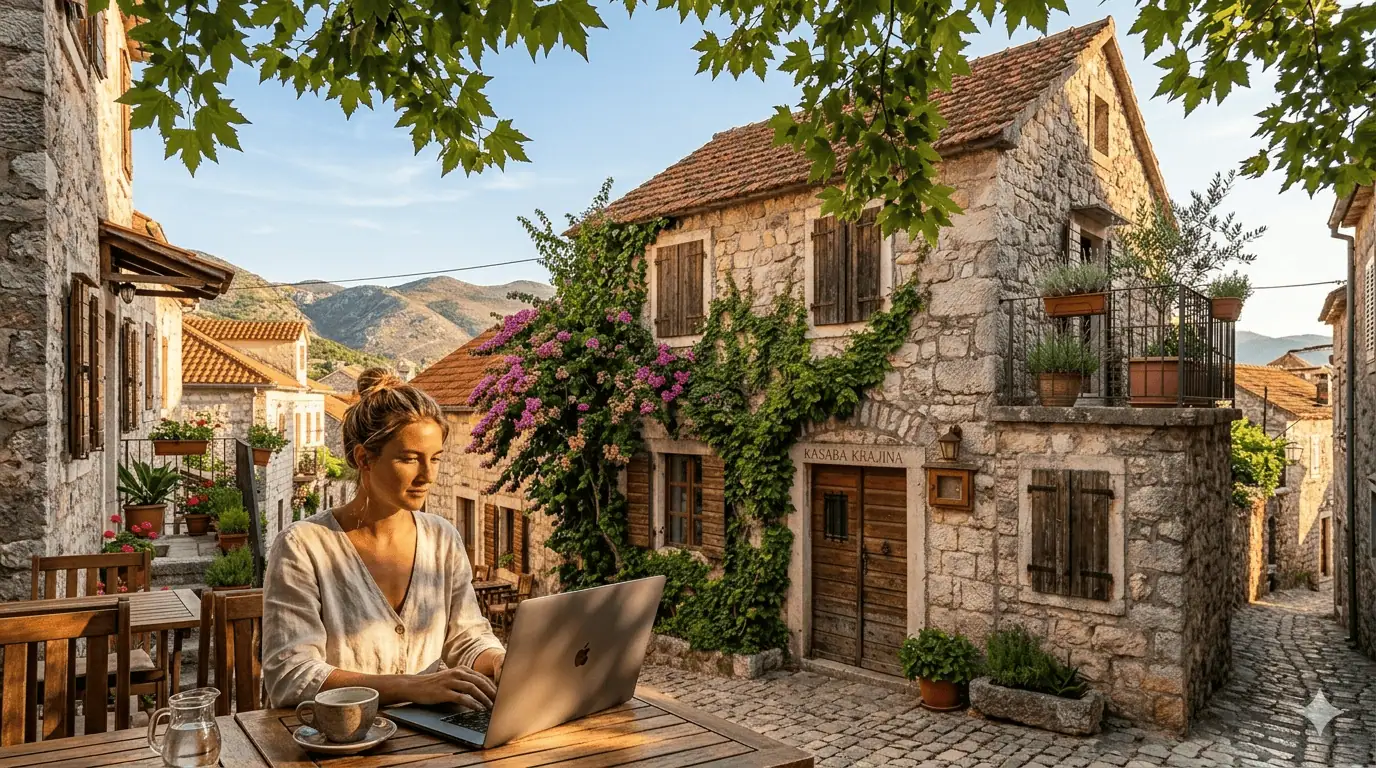
By mid-morning you should be sitting on the riverbank, a kafa in front of you, doing absolutely nothing. Coffee in Trebinje is not a drink you order on the way to somewhere else. It is the somewhere. The terraces along the Trebišnjica all know this — the classic choice is the summer garden under the plane trees at Platani, next to the market square, which the tourist organisation lists among the town’s landmarks. Choose any of them, order a small black coffee, and let the water do the conversation. Nobody will hurry you — the bill arrives when you ask for it. If you are working from Trebinje rather than just passing through, the cafés and coworking guide covers which of these terraces actually hold up for a laptop session.
Trebinje cafes offer some of the best coffee in the area. I’m from Canada, and I cannot imagine the better way to start my day!
The view from Crkvina hill
Before the heat of the day, climb for the one panorama that defines Trebinje. Hercegovačka Gračanica, the monastery on Crkvina hill above town, is a thirty-minute walk from the centre (follow Preobraženska street uphill), and it is open from seven in the morning. Built in 2000 as a reduced copy of the famous Gračanica in Kosovo, it was raised to honour a wish in the will of the poet Jovan Dučić, who asked to be buried in a church like the one on Kosovo field — and his grave, marked simply “Jovan Dučić – poet,” sits to the right of the church. The official page for the monastery covers the story; nothing covers the view. The whole city, the green ribbon of the river, and the hills rolling toward Montenegro spread out below, and in the morning light it is worth every step.
Don’t visit. Stay.
The mistake most first-time visitors make is treating Trebinje like a checklist. There is one genuinely famous sight — the monastery at Tvrdoš, a short drive away — and a handful of pleasant others. Tvrdoš is worth the trip, not least because it makes both the region’s finest wines and, lately, award-winning olive oil; the wine country guide plans that outing properly. But none of the sights reward the rushed approach, and none of them are going anywhere.
Where to go next
When the afternoon gets long, walk the riverbank path upstream, past the weir and into the fields beyond. Before the fields there is the Arslanagića Bridge — the 16th-century Ottoman crossing, nine arches and 92 metres of stone, that was moved brick by brick in the 1960s when the river was dammed. It is flat, green and mostly empty out here, and the bridge makes a natural turn-around point. This is where you begin to understand why people who stay here, stay.
For the days after the first, the getting around guide covers bikes, buses and car hire — a bicycle is the right tool for the river path — and the rest of the site will fill your week. Your first morning in Trebinje should feel less like sightseeing and more like being shown around by someone who lives here. Because, in a small way, you are.