On this page
- The climate: genuinely Mediterranean, with two honest caveats
- The month-by-month reality
- What the climate means for health
- Healthcare: the three-layer reality
- Layer one: the public system, after residency
- Layer two: private care, cheap but concentrated
- Layer three: international insurance
- Pharmacies and medications
- Emergencies: what to actually do
- The bottom line on healthcare
- Daily life: easy, by design
- Where retirees actually live
- Community, and how fast it forms
- Safety
- The seasons of daily life
- The language question
- The practical layer
- The honest checklist before you move
- Who this is for, and who it isn’t
Most people decide to retire in Trebinje because of the numbers — the cost-of-living article on this site does that job — and then ask three questions the numbers can’t answer: is the healthcare good enough? what is the climate really like? and what does a normal day actually look like?
This guide answers those three, honestly. It doesn’t re-run the budget (that’s the cost of living guide for retirees); it covers what the spreadsheets miss — the system you’ll depend on, the weather you’ll live in, and the small texture of a day.
The climate: genuinely Mediterranean, with two honest caveats
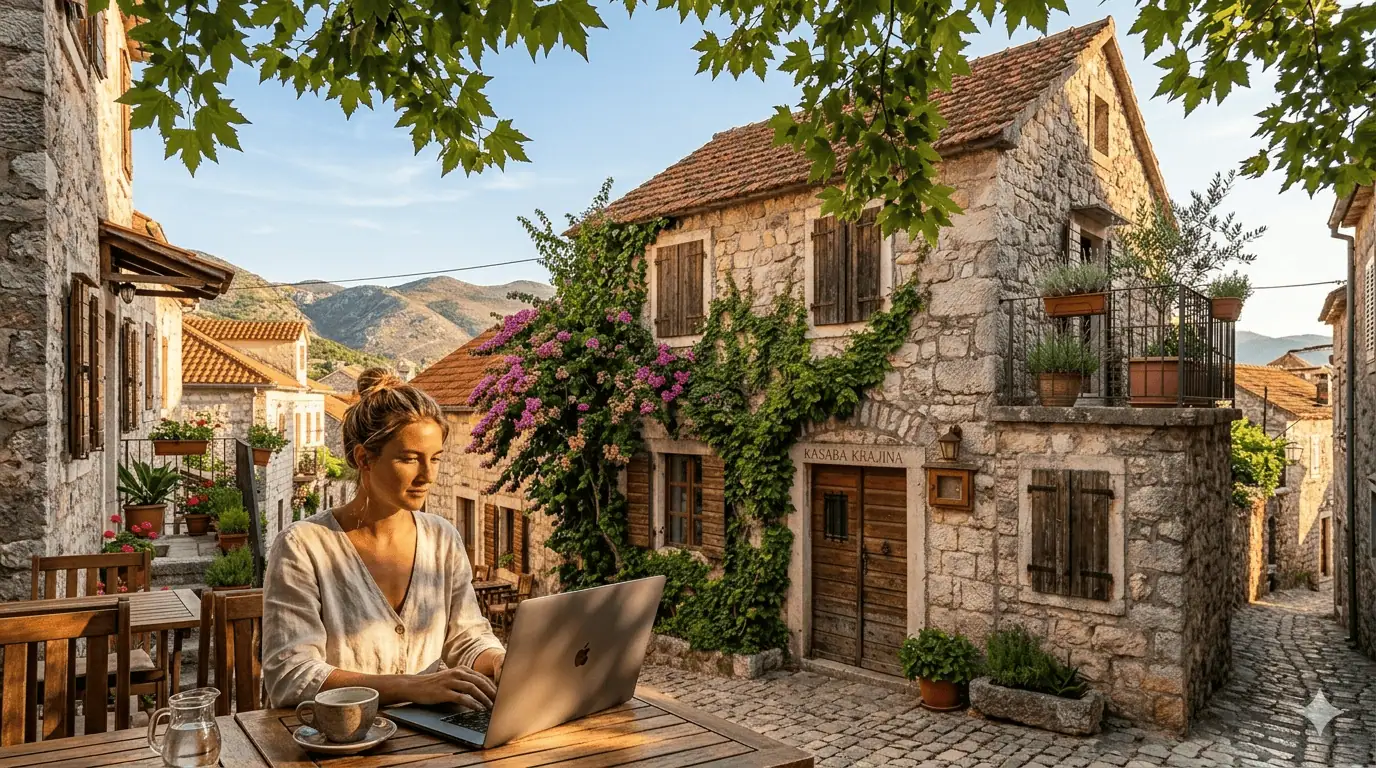
Trebinje sits in the far south of Bosnia — the southernmost city in the country — tucked between the Dinaric mountains and the Adriatic, at about 275 metres above sea level. That position is the whole story: close enough to the sea for the Mediterranean climate, far enough inland to escape the coastal crowds. It’s frequently quoted as one of the sunniest towns in the Balkans, with 260–270 sunny days a year and roughly 3,200 hours of sunshine annually.
Average daytime highs run from about 6°C in January up to 26–27°C in July and August, with the warmest readings pushing past 40°C on the worst summer afternoons. Nights stay comfortable — the mountains cool things off — which is why Trebinje’s evenings are its best feature.
The month-by-month reality
| Month | Daytime high | Rain | The honest picture |
|---|---|---|---|
| January | ~6°C | 140 mm | Cold, grey, occasionally frosty. Inside a heated home, fine; outside, you feel it. |
| February | ~7°C | 125 mm | Still winter. First almond and early plums hint at what’s coming. |
| March | ~11°C | 120 mm | Spring arrives properly. Daffodils, longer evenings. |
| April | ~15°C | 110 mm | Genuinely pleasant. The best “spring” month. |
| May | ~20°C | 90 mm | The climate hits its stride. Warm days, cool nights. |
| June | ~23°C | 75 mm | Full Mediterranean summer begins. Terrasse weather every day. |
| July | ~26.5°C | 60 mm | Hottest, driest, sunniest. Real heat at midday, lovely from 6pm. |
| August | ~26.5°C | 65 mm | Same as July. Locals say September is the reward for August. |
| September | ~23°C | 95 mm | Warm, dry, uncrowded. Many retirees call it the best month. |
| October | ~17°C | 130 mm | The good autumn. Warm days, cool nights, golden light. |
| November | ~11.5°C | 175 mm | The wettest month by far. Grey, drizzly, indoor time. |
| December | ~7°C | 165 mm | Winter again. Heating on, woodsmoke in the air. |
The two honest caveats:
- Winters are mild but not warm. Daytime highs around 5–8°C from December through February, and nights can dip below freezing. It rarely snows hard or settles for long, but you’ll need proper heating. Many apartments run on wood stoves or electric radiators, and winter heating is a real line item — the retiree cost guide prices it.
- Autumn is the wet season, and it’s wet. Trebinje receives 1,400–1,650 mm of rain a year — far more than nearby Dubrovnik — and most of it falls between October and December. November is the wettest month by a wide margin. The pay-off is the dry, cloudless summer and the famous warmer autumns than springs: October is often lovelier than April.
What the climate means for health
For health, the relevant facts: warm, dry summers suit arthritis and respiratory conditions, the low humidity (summer relative humidity sits in the mid-60s) is kind to joints, and the hilly but not mountainous terrain keeps pollen and air quality reasonable. Air quality in winter is the one caveat — wood-burning households make the air smokier than in summer, though nothing like the big-city inversion problems you see further north. Locals and long-term retirees consistently describe the summer shoulder seasons — May–June and September–October — as the best months to actually live in Trebinje: full sun, mid-20s, no crowds.
One underappreciated detail: because autumn is warm and dry, the outdoor season is longer than the calendar suggests. The riverfront cafés stay full into late October, and the town’s famous wine country weekend falls in the golden shoulder weather. The spring in Trebinje and a first morning in Trebinje pieces capture the seasonal rhythm, and the weather spark climate data for Trebinje has the full tables if you want the granular version.
Healthcare: the three-layer reality
Healthcare is the question retirees most often get wrong before they arrive, because two separate facts collide: the local public system is cheap and functional, but the local private system is limited, and neither looks like what a Western retiree is used to.
Trebinje sits in Republika Srpska, which runs its own compulsory health insurance through the Health Insurance Fund of Republika Srpska (FZO RS). Bosnia as a whole is fragmented — 13 health insurance funds across the two entities — and Republika Srpska’s is the more centralised, coherent one. The insurance guide for expats explains the full three-layer model; here’s what it means in practice for a retiree.
Layer one: the public system, after residency
Once you hold a residence permit, you can register with the health fund. Monthly contributions for the self-employed and retirees typically run €30–50, and once registered you’re in the same system as locals:
- GP and family medicine — the front door, free or near-free for registered patients, at local health centres
- Hospital care — including the Trebinje hospital (Bolnica Trebinje, on Dr. Levija), which handles routine care, internal medicine, surgery basics and emergency
- Many medications at subsidised rates, with co-payments on outpatient prescriptions
- Emergency care is available to everyone regardless of insurance status — no one is turned away at the door
The honest limits: specialists and advanced diagnostics are the weak point locally. For cardiology, oncology, imaging (MRI/CT), and anything specialist, you’re realistically looking at Mostar, Sarajevo, Belgrade, or across the border into Dubrovnik — all under two hours’ drive, and the getting around guide covers the cross-border logistics. The fund’s referral system also means waiting times for public specialists can stretch to weeks.
Layer two: private care, cheap but concentrated
Private medicine in Bosnia is genuinely affordable — private GP visits run €20–40, specialists €40–70 — and the private sector is where you’ll find English-speaking doctors. The catch is geography: Trebinje has a small private clinic network and a strong dental scene (dental tourism is a real local industry, with clinics like Caninus offering EU-standard work at a fraction of Western prices), but for a broad range of private specialists you’ll travel to Mostar or Sarajevo. The numbeo healthcare index for Trebinje shows the community’s own verdict on the care.
Layer three: international insurance
Because the public system is fragmented and the private system is concentrated elsewhere, the standard retiree setup is hybrid: international health insurance kept alongside the public coverage. Comprehensive plans valid in Bosnia run €40–80 a month for younger retirees, climbing with age — a 65-year-old pays substantially more than a 50-year-old, so get quotes rather than trusting a headline. The key benefits are:
- Private specialists and clinics when you need them, paid directly
- Medical evacuation and repatriation — the piece locals underrate until they need it; serious treatment means a border crossing, and that’s exactly what evacuation cover is for
- Cross-border coverage so your Dubrovnik and Montenegro hospital visits are handled
The insurance guide has the full provider breakdown and what to check before buying.
Pharmacies and medications
Pharmacies (apoteke) are plentiful, easy to spot by the green cross, and staffed by trained pharmacists who are used to advising on common conditions directly. A meaningful difference from Western practice: many medications that need a prescription at home are sold over the counter here — the retiree cost guide lists realistic prices for blood-pressure, diabetes and pain medication, and they’re a fraction of Western costs. If you take something specific and chronic, bring a letter from your home doctor with the generic (INN) names, because brand names differ and pharmacists work off the active ingredient.
One practical note on importing: Bosnia regulates medication imports strictly, and customs generally clears personal shipments only with a local prescription. Don’t rely on being able to post refills from home — bring a sufficient supply for your first months and establish your local pharmacy relationship early. That supply also matters for the first weeks before you’re registered with any system, when you’re still on travel insurance alone.
Emergencies: what to actually do
The emergency numbers in Bosnia are the regional standard: 112 for the general emergency line, 122 police, 123 fire, and 124 ambulance. The ambulance line is staffed 24/7 and dispatches the nearest team. The honest note: emergency response in a town this size is fast in the centre and slower on the outskirts, and the ambulance crew will triage and decide the destination hospital — in Trebinje that’s the city hospital. For anything genuinely serious, the ambulance or your own car heads across the border to Dubrovnik’s hospital, about 40 minutes away, which is exactly why the evacuation clause in your international policy matters. Keep your insurance card, passport, and a list of your medications by the door — it sounds paranoid, and it’s the difference between a bad hour and a bad week.
The bottom line on healthcare
For routine and chronic care — GP visits, blood pressure, diabetes, dental, check-ups — Trebinje is more than adequate and remarkably cheap. For acute or specialist care you’ll lean on the private sector and, occasionally, a border crossing. If you’re moving here with a serious pre-existing condition, get the evacuation and specialist picture straight before you commit — that’s the honest caveat every long-term retiree here ends up giving you.
Daily life: easy, by design
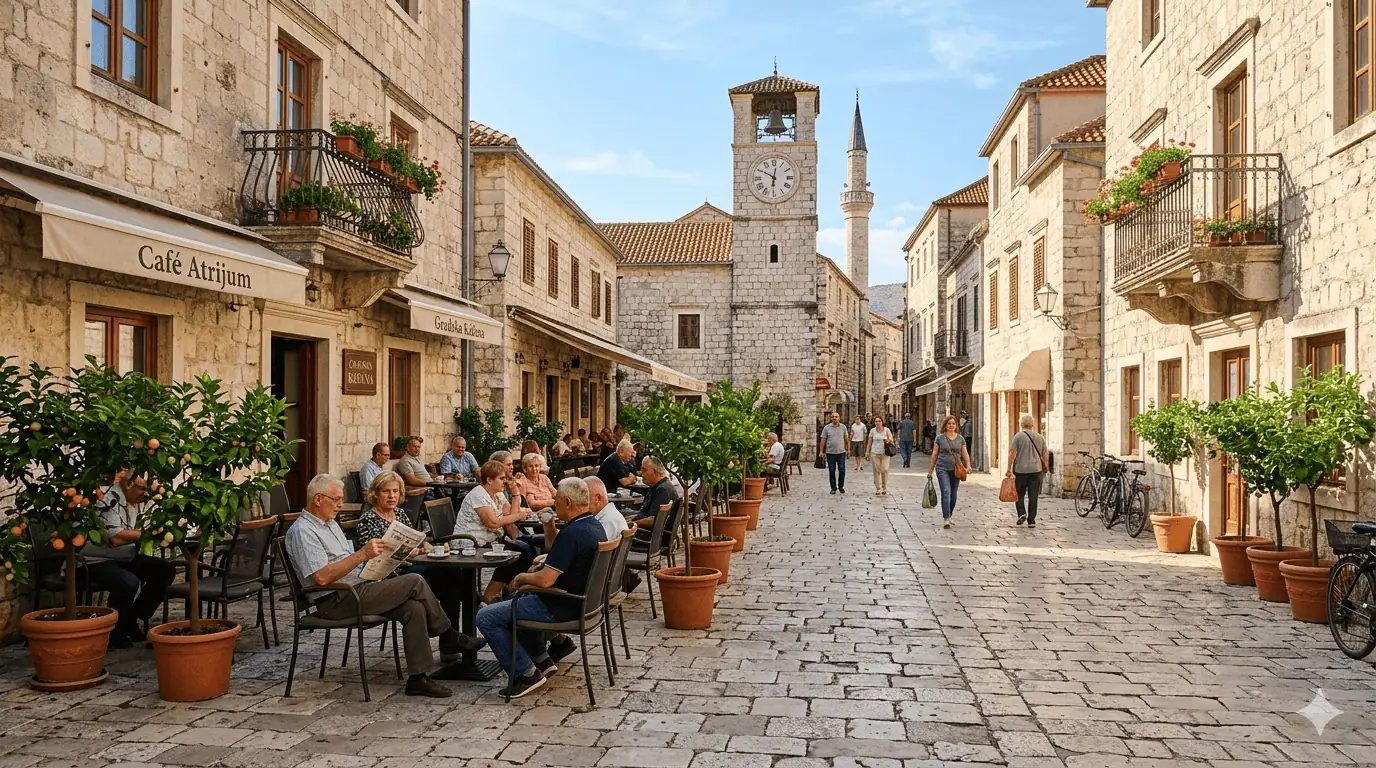
This is where Trebinje quietly wins. The city is compact, flat and walkable — the old town, riverfront, markets, cafés and hospital are all within a 15–20 minute walk of each other — and almost everyone over 60 lives their day on foot. The walking the old town guide is the literal version of this; the lifestyle version is below.
Where retirees actually live
Most foreign retirees end up in one of three places: a modern apartment within a few blocks of the riverfront promenade (new-build stock, elevator, parking, close to the cafés), a stone house in the old town quarter for those who want atmosphere over convenience, or a house with a garden on the hillside neighbourhoods above town — where retirees who want to grow things and have space for visiting family settle. All three are walkable to the centre; the hillside ones involve more steps. The diaspora return guide and the bank account guide cover the buying and paperwork side; the practical reality is that a ground-floor or elevator apartment is the standard retiree choice, and summer temperatures mean you’ll want one that isn’t a top-floor sauna.
The rhythm of a day is Mediterranean-European: mornings at the farmers’ market and a €1 coffee at a riverfront kafana, lunch between 2 and 3, an early evening passeggiata along the Trebišnjica, dinner late. The where locals actually eat guide and the best cafés and coworking spots piece cover the specifics.
The Trebišnjica deserves its own line. It’s one of the longest sinking rivers in the world — roughly 96 km above ground and another 90 km below it, re-emerging in Dubrovnik — and its promenade is the town’s living room. Retirees walk it morning and evening, fish along it, and drink coffee watching its famously green water. It floods dramatically in winter and is the defining backdrop of daily life; a river-view apartment is the closest thing Trebinje has to a status symbol.
Community, and how fast it forms
Community comes easier than almost anywhere in Europe. The café table is the social institution — you sit, you stay for an hour, no one rushes you. The diaspora presence is large, and a meaningful share of foreign residents are retirees, which means there’s an existing network of people exactly in your situation. The diaspora return guide is written for the homecoming version of this; the expat version works the same way — one café, one market stall, one neighbourhood walk, and you know people.
There is no formal “expat club” to join, and that’s oddly to the good: networks form organically around the two or three cafés where foreign residents land, the market, and the river walks. Because the town is small — around 25,000–31,000 people depending on the count — familiarity compounds quickly. You will be recognized, greeted, and remembered, which is exactly what a retiree leaving a big anonymous city usually wants. English is spoken by younger people and anyone who worked in tourism; for the rest, a warm greeting and a phrase or two go a long way.
Safety
Safety is a genuinely notable feature. Violent crime is rare, and the small-city dynamic — everyone knows everyone — makes it a place where retirees feel comfortable out late alone. This is one of the most-cited reasons long-stay foreigners give for staying, and it holds up in practice. Petty crime is occasional and concentrated in the usual places; ordinary prudence — don’t leave a phone on an outdoor café table, lock the car — is the whole security playbook. For comparison, the town repeatedly feels safer than the coastal Croatian cities just across the border, which deal with a volume of tourism crime Trebinje simply doesn’t see.
The seasons of daily life
Daily life is genuinely seasonal in a way that surprises people used to climate-controlled cities:
- Summer — everything moves outdoors. The riverfront is full until midnight, the wine-cellars around Tvrdoš host long evenings, and the day trips to Dubrovnik, Kotor and Mostar are the standard weekend.
- Autumn — the golden season. The harvest markets, the wine festivals, the last warm weeks of riverfront sitting.
- Winter — social life goes inside and slows further. Woodsmoke, rakija, long lunches, neighbours visiting. This is the season that decides whether you’ll actually stay, and it’s milder and more sociable than the reputation suggests.
- Spring — the whole town comes back out at once. The spring in Trebinje guide captures the mood swing.
The language question
The language question is the one honest friction point. English is limited, especially among older generations; younger people and those who worked in tourism speak it well. A working set of phrases — greetings, numbers, ordering, “koliko košta?” — goes a long way and is genuinely appreciated. You can get by without it, but you’ll have a better life with the basics, and the cost of living guide has the practical language tips.
The practical layer
Four logistics questions dominate retiree life here, and all four have covered ground on this site:
- Residency — the 90-day visa-free window works for long stays split across borders, but true retirement needs the temporary residence permit. The residency guide covers the grounds, documents and timelines. Retiring on a foreign pension is an accepted ground, but the paperwork — translations, apostilles, medical certificate, proof of health insurance — is exactly where people trip up, so start three months out, not three weeks.
- Money — pensions arriving from abroad need a local account (the bank account guide for foreigners covers which banks work in Trebinje and what to bring), and the BAM is pegged to the euro, so exchange risk is minimal. Two practical notes: set up your international pension transfers (Wise, Revolut, or a bank wire) before you leave, and bring your tax-residency picture straight — where you’re tax-resident changes what you owe at home.
- Getting around — most retirees keep a car for Dubrovnik runs and regional travel; the getting around guide has the driving and border essentials, and the day trips guide shows how close three countries actually are. A car is close to essential for anyone living outside the immediate centre; in the centre, the whole town is walkable.
- Healthcare registration — the moment your residence permit lands, register with the local health fund (the FZO RS office is the front door) and choose a family doctor. Doing this in the first weeks, while your paperwork is fresh, is the single best investment in a smooth first year.
The honest checklist before you move
If you’re seriously weighing Trebinje, work through this before committing:
- Spend a full season here first. Come for the May–June shoulder or September–October — the climate at its best — and live the daily life, not a holiday.
- Get the healthcare picture specific to you. If you have a chronic condition, confirm how you’ll see a specialist (which city, which clinic, what it costs) and whether your insurer covers it. Don’t rely on the reassuring generalities in this article.
- Bring the paperwork. Translations, apostilles, medical records, a letter with your medication’s generic names — all cheaper and easier at home.
- Establish the money pipeline. A local account, a working transfer method, and a clear tax-residency plan before you land.
- Learn thirty phrases. Greetings, numbers, ordering, asking for help. It changes everything about how fast you’re welcomed.
Who this is for, and who it isn’t
Trebinje is a superb retirement for people who want a safe, sunny, cheap, slow-paced base with genuine community and easy access to three countries. It’s the wrong choice if your healthcare needs are complex and urgent, if you need a full English-speaking specialist ecosystem on your doorstep, or if you’re after big-city amenity — theatre, high-end hospitals, international restaurants. It’s the right choice if you value the Mediterranean rhythm, the €1 coffee, and the feeling that nothing here is trying to take your money.
The decision framework that actually works: spend a season here first. Come for the May–June shoulder — the climate is at its best, everything is open, and the cost of living guide gives you the budget to test it properly. If the summer suits you, the rest of the year almost certainly will. And if you’re deciding between Trebinje and another Balkan base, the Trebinje vs. Mostar comparison makes the trade-offs explicit rather than vibes-based.
Related guides: