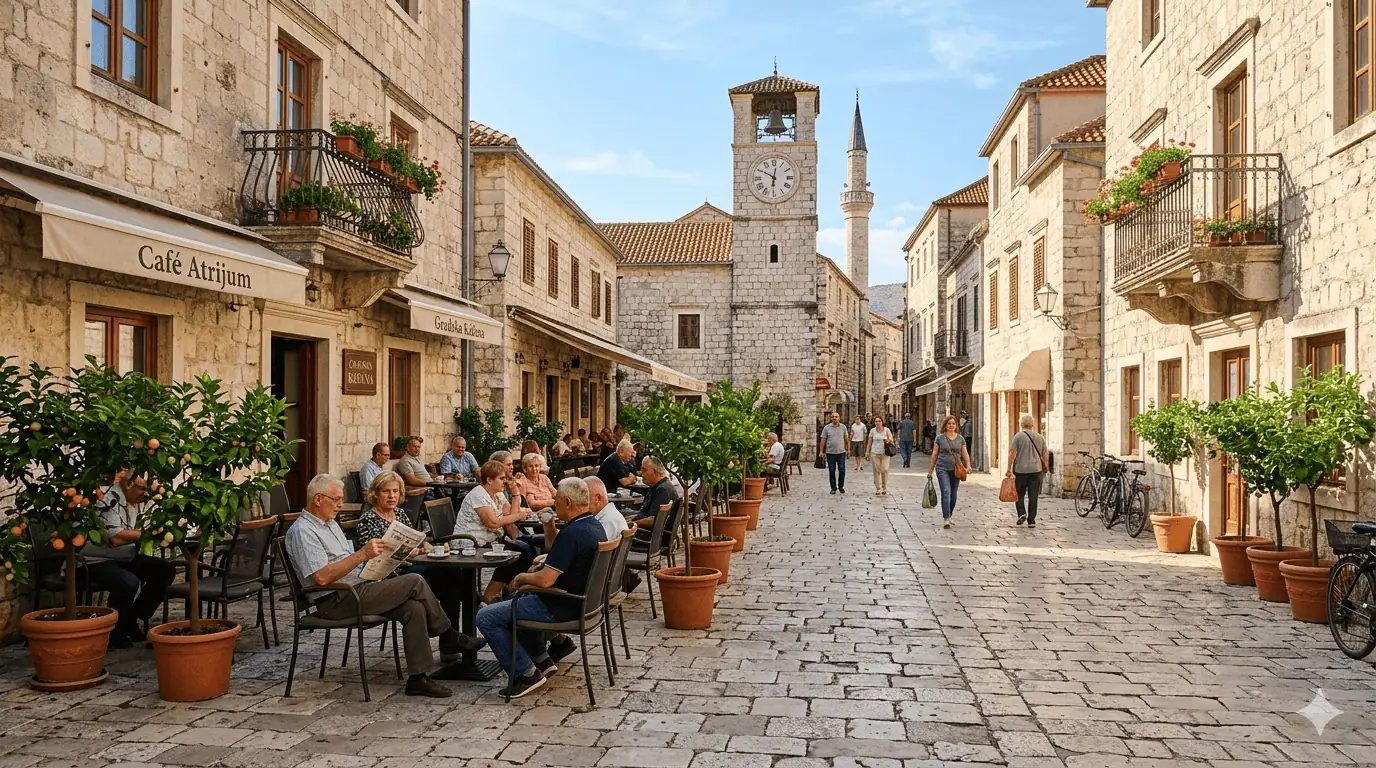
Spring in Trebinje is not a season so much as a mood adjustment. The plum trees flower in the orchards above town, the cafés move their tables to face the river, and the festival season begins in earnest. The days turn warm without turning hot, the light stays long, and the whole city — which has spent the winter talking about the town — finally gets up and goes out into it.
Here is what is worth planning around, with dates checked against the town’s official events calendar and the independent What’s On listings.
The festival calendar
- March — Trebinje Vertikal: the town’s mountain-running season opens with a trail race (“the race in the stone”) up into the karst hills above the city, organised by the local mountaineering club. You can watch from the river path or sign up and suffer properly; either way, it is the first sure sign that winter is done.
- Early April — Dučić’s Days: two days of poetry, readings and theatre honouring Trebinje’s most famous son, the poet Jovan Dučić, staged around the Cultural Centre and the old town. It is the town’s literary week, and the programme is deliberately small and serious — book early, because the good evenings fill with locals before visitors know they exist.
- Easter (April): Orthodox Easter is the big meal of the spring — spit-roasted lamb, coloured eggs, and the gentle clatter of egg-tapping on the square. Dates move with the church calendar (in 2026 it fell in mid-April), so check before you book, and note that many shops and restaurants close for the holiday weekend.
- Mid-May — International Children’s Festival: a week of performances for and by children at the Youth Centre (Dom mladih), with groups from across the region. This is the week the town turns up for its own youngest citizens, and it is far more charming than it sounds on paper.
- 18 May — Museum Night: the Museum of Herzegovina opens after dark with guided tours, exhibitions and music in the courtyard. Free, atmospheric, and one of the few evenings of the year the museum shows off its setting as much as its collection.
- Late May — the music school’s annual concert: the spring recital, on the square or in the Cultural Centre’s hall, where the town hears the year’s crop of young musicians.
- The quiet events: most of the town’s best events are the unannounced ones — a village feast, a cellaring day, a school concert on the square. Ask at your guesthouse what is happening that week; the local producers and market people always know first.
The river comes back
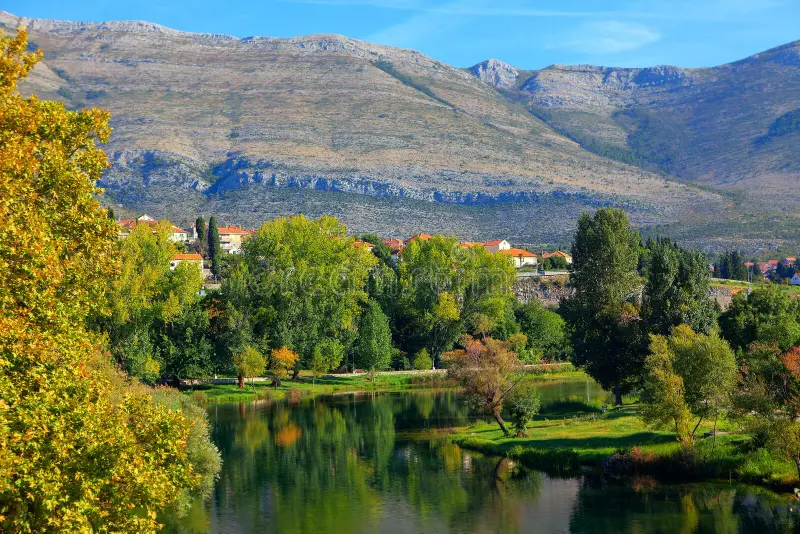
In spring the Trebišnjica runs high and cold, fed by the snowmelt off the mountains, and the town reclaims its banks. The running path fills with joggers, the terraces with the sun-warmed afternoon crowd. This is the season to rent nothing and do everything on foot — the river walk from the old town up past the Arslanagića Bridge is green, empty and at its best in the long April evenings. When the coffee terraces by the water move back outdoors, spring has officially taken hold.
The markets return
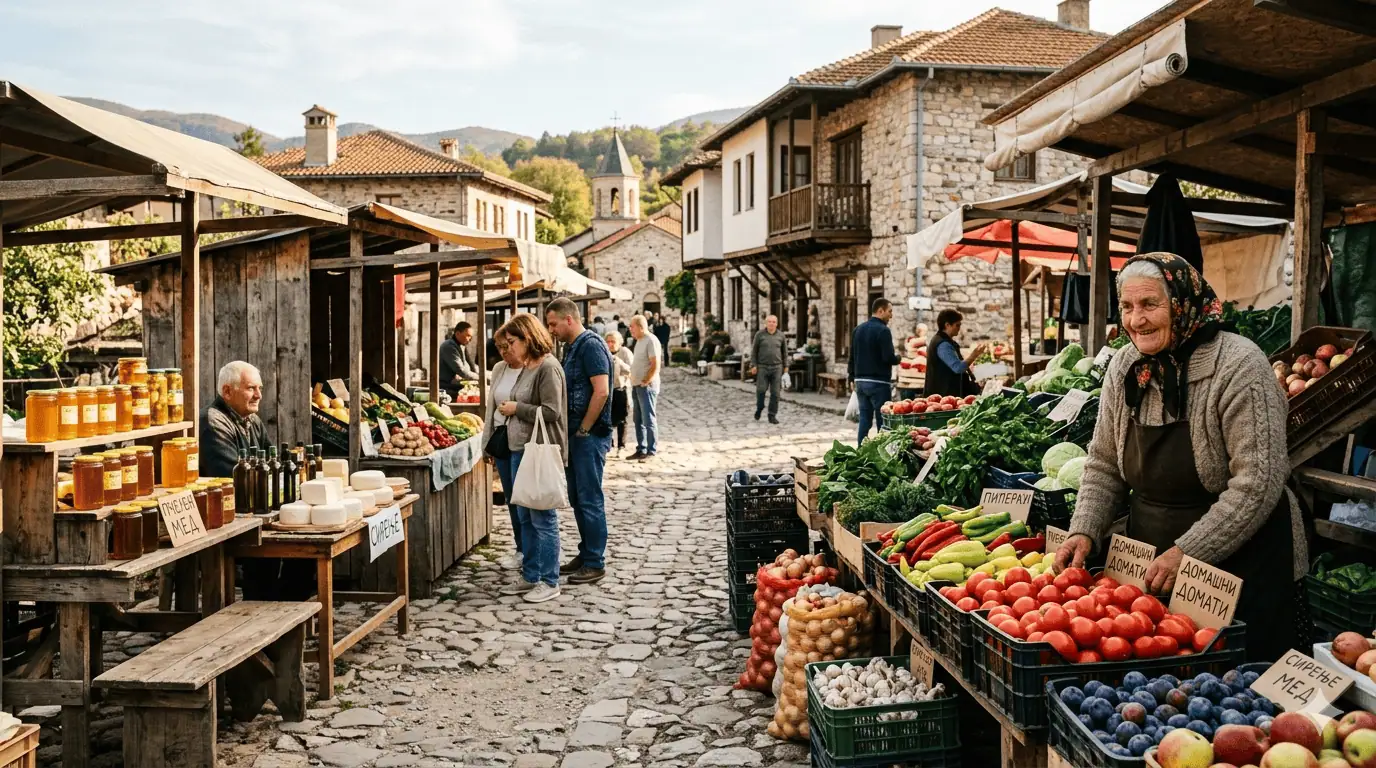
From April, the Saturday market gains a second row of stalls — flowers, seedlings, young wine, and the first serious produce of the year. The stallholders who spent winter trading in winter vegetables suddenly have wild asparagus, young garlic, radishes, and flat after flat of strawberries. Buy a flat and eat them on the way home. This is the correct use of a spring morning. For what to look for as the season deepens — the cheese, the honey, the seasonal rhythm of the stalls — the markets and producers guide is the handbook.
Winter is for talking about the town. Spring is for the town.
Eating the season
Spring is when the food calendar catches up with the blossom. The centrepiece is Easter — roasted lamb, usually on the spit or under the sač, eaten with spring onions and young greens, with plenty of local red wine to follow. After Easter, the taverns turn to the young lamb and fresh salads that only exist for a few weeks, and the countryside tables fill with uštipci, cheese and the first of the honey. The where-to-eat guide tracks the tables worth planning around, and the vineyards shake off winter too — the hills around town are in blossom in April, making the wine country loop the most photogenic it gets all year, even before a single tasting.
Spring walking
The best spring itinerary is the one you invent after breakfast, but two routes deserve priority. Climb Crkvina hill while the air is still cool for the blossom-and-river panorama from Hercegovačka Gračanica — the first-morning plan structures the climb properly. Or walk the old town before the day warms, when the plane trees on the square are coming into their first leaves and the alleys are still quiet — the old town walking guide names everything you are passing. Bikes along the river path are the third option if the legs want covering ground; the getting around guide has the rental details.
The one warning
Do not plan too much. Spring is Trebinje’s apology for the winter quiet, and it is best accepted slowly — a coffee by the river, a walk in the orchards, a market bag heavy with things you did not plan to buy. The festivals are worth a booking, the lamb is worth a table, and the blossom will not wait for your schedule. Let the season do the arranging.